
NASA's 22-year-old Swift telescope to fall to Earth on Nov. 4
NASA's Neil Gehrels Swift Observatory is expected to re-enter the atmosphere on November 4, after an attempt to rescue the spacecraft failed.
 Merhabyte Newsdesk · · 2 min read
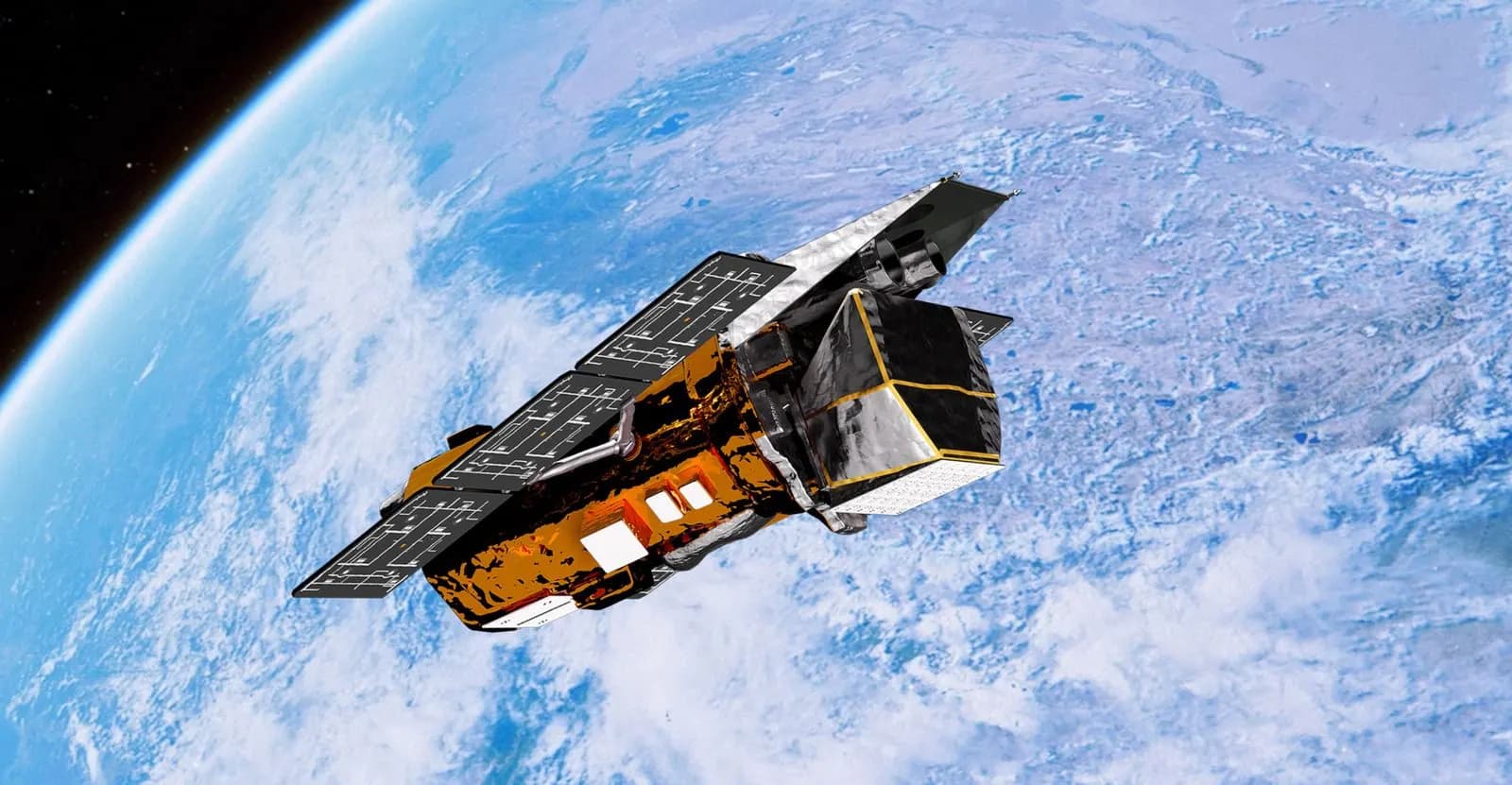
NASA's Neil Gehrels Swift Observatory is expected to re-enter Earth's atmosphere on November 4 at around 3:30 a.m. Eastern time, according to U.S. Armed Forces estimates. The prediction carries an uncertainty of 11 hours, so the actual moment of re-entry could differ from that time. What is certain is that the roughly 3,200-pound (about 1.45-ton) spacecraft is coming home.
Swift launched 22 years ago. An attempt by NASA to rescue the observatory ended in failure, so a mission that has lasted more than two decades will conclude with a fall back to Earth.
Why the rescue mission fell short
Swift's orbit had been decaying faster than expected. In early July, NASA therefore began a rescue effort called Swift Boost, with the aim of allowing the telescope to keep collecting data for the agency for years to come. Under the plan, a robotic spacecraft called LINK, built by Katalyst Space, would dock with the observatory and tow it into a higher orbit.
LINK ran into problems with its attitude control. Unable to control its position and orientation in space, the vehicle kept tumbling helplessly, which also caused communication problems. A few weeks after the issues emerged, NASA decided to end the mission, and the plan to raise Swift's orbit came to nothing.
Swift's scientific legacy
NASA ended Swift's operations in late October, after the observatory had been placed in safe mode and prepared for re-entry. Over its lifetime, Swift observed more than 2,000 gamma-ray bursts. These are among the most powerful explosions in the universe, and they reach peak brightness in less than two seconds. Before Swift, there was no way to catch these brief flashes of energy in time.
The observatory also gathered data on 1,400 supernova explosions, as well as on asteroids, comets, stars torn apart by black holes and other activity across the universe. That variety allowed the telescope to follow a wide range of events in the sky throughout its life.
Is there any risk during re-entry?
According to NASA, most of Swift will burn up in the atmosphere, though some components could reach the ground without burning up. Even so, the risk that any surviving piece could harm a person is described as very low.
NASA and the U.S. Armed Forces continue to track the falling telescope and will update their predictions as needed. Given the margin of uncertainty, the exact time of re-entry will only become clear once it happens, but it is plain that the mission has reached its end.
Comments
No comments yet. Be the first to comment.