
Intel Shifts PC Chip Capacity to Xeon as AI Demand Outruns Supply
Intel is moving some manufacturing capacity from client processors to Xeon server chips to meet AI-driven data center demand, which it says will exceed supply for several quarters.
 Merhabyte Newsdesk · · 3 min read
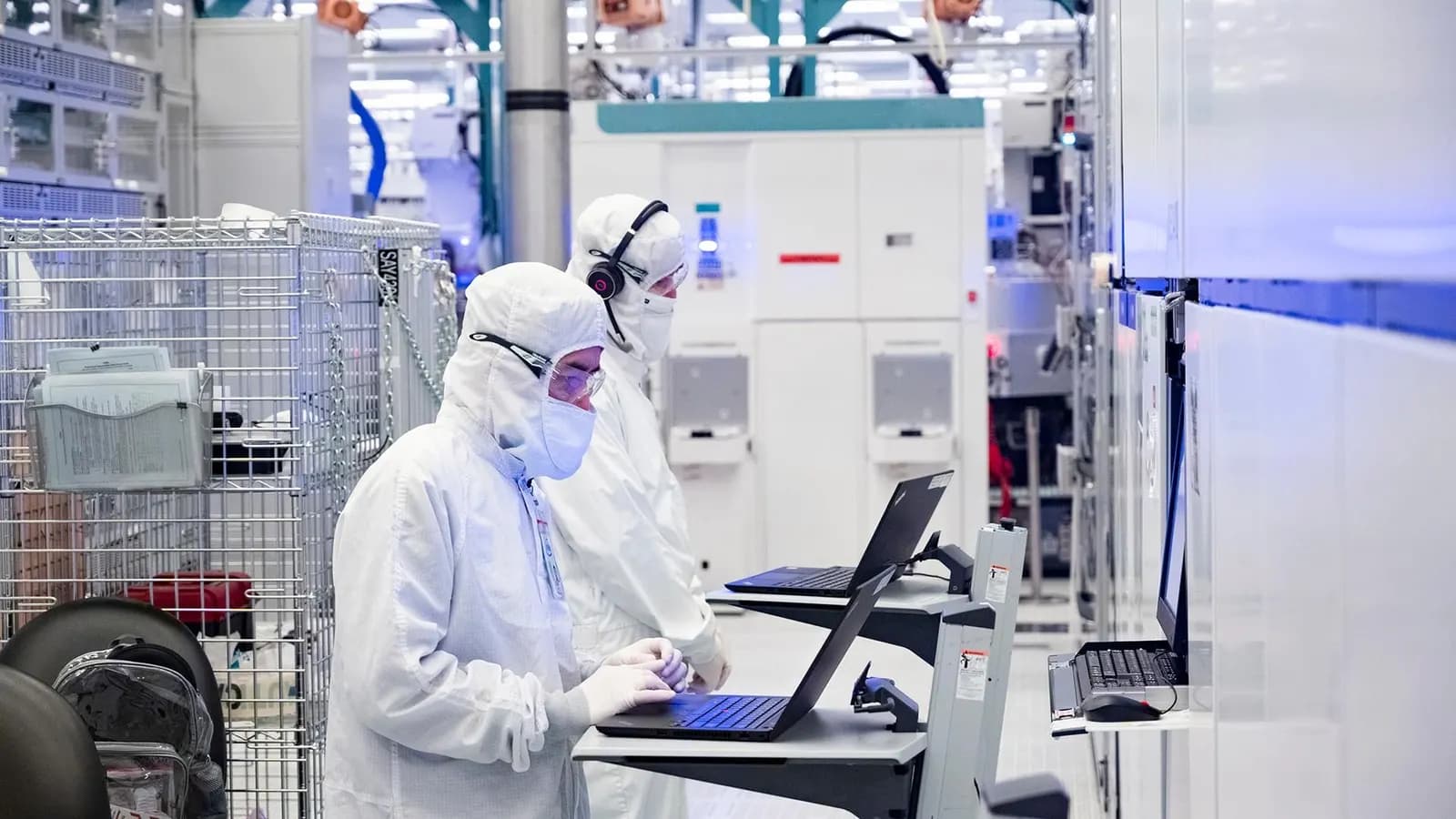
Intel expects the consumer PC market to keep shrinking in the coming quarters, but it is betting that heavy demand from the AI industry will more than make up for the loss. To that end, the company is shifting some of its manufacturing capacity from client processors to data center processors.
According to remarks at the company's third-quarter 2026 earnings call, demand for server processors continues to exceed supply even after substantial production increases planned over the next several quarters. CEO Lip-Bu Tan said the industry is going through one of the largest supply shortages in its history and pointed to the difficulty of keeping up with server demand in the quarters ahead.
Data center revenue is surging
Intel's Data Center and AI (DCAI) division posted revenue of $7.3 billion in the third quarter. That is up 17 percent from the previous quarter and roughly 80 percent from the same period a year earlier.
The company expects data center CPU demand to stay strong through 2027 and 2028, as agentic and inference workloads increase processor utilization.
Intel 3 capacity is being expanded
The top priority is raising output of the Xeon 6 "Granite Rapids" processors, built on the Intel 3 process. Management says Granite Rapids is Intel's fastest-growing server processor family, yet demand still exceeds available supply. A capacity expansion at the Fab 24 campus in Ireland began recently, but unless the process can be sped up, that capacity will come online at the end of 2027.
Intel also plans to convert some manufacturing resources in Oregon from Intel 18A to Intel 3 to add more Intel 3 capacity. Those resources were originally earmarked for Panther Lake client processors, but weak PC demand has let Intel prioritize data center products that are in higher demand. Finance chief Dave Zinsner said the capacity taken offline to set up Intel 3 in Oregon was 18A wafers intended for Panther Lake products, and that the freed capacity gives the company a chance to produce more data center wafers. The additional Intel 3 capacity in Oregon is expected to enter production in the second half of 2027. Intel says Intel 3 manufacturing costs have fallen about 15 percent since the first quarter of 2026, and that yield improvements and shorter production cycles are helping extract more processors from existing capacity.
Arizona 18A buildout and Nova Lake expectations
Intel is also accelerating its advanced manufacturing operations in Arizona. Intel 18A production is ramping at Fab 52, while equipment installation at the adjacent Fab 62 began ahead of schedule. Fab 62 is planned as the company's second high-volume manufacturing site for 18A, 18A-P and derivative processes. These investments will support future 18A/18A-P-based products, including server processors, though the company did not say how capacity will be divided between client and data center products.
Intel also said it expects to gain client market share with its Core Ultra 400 series "Nova Lake" processors, which will require those parts to be produced in high volume. The company also accelerated purchases of new manufacturing equipment in the third quarter.
The bottleneck is not just wafers: substrates and packaging
According to Zinsner, Intel is constrained not only on wafers but also on substrates. Supply of the advanced organic substrates needed for multi-die processors packaged with technologies such as EMIB and Foveros is tight. The company is working with suppliers to increase capacity and expects roughly 40 percent additional substrate capacity in the second half of 2027.
Intel is also expanding advanced packaging capacity in New Mexico and Malaysia. Granite Rapids uses EMIB to connect its compute dies, while the new Clearwater Forest Xeons combine EMIB with Foveros Direct 3D and hybrid bonding to stack Intel 18A compute dies on top of Intel 3 base dies. As production of more complex multi-die products grows, additional packaging capacity will become critical.
Comments
No comments yet. Be the first to comment.