Intel's Israel fab explosion to cost about $600M in revenue
A fatal blast at Fab 28 halted the plant for two weeks. Intel says the hit will span two quarters and cut shipments of server processors.
 Merhabyte Newsdesk · · 2 min read
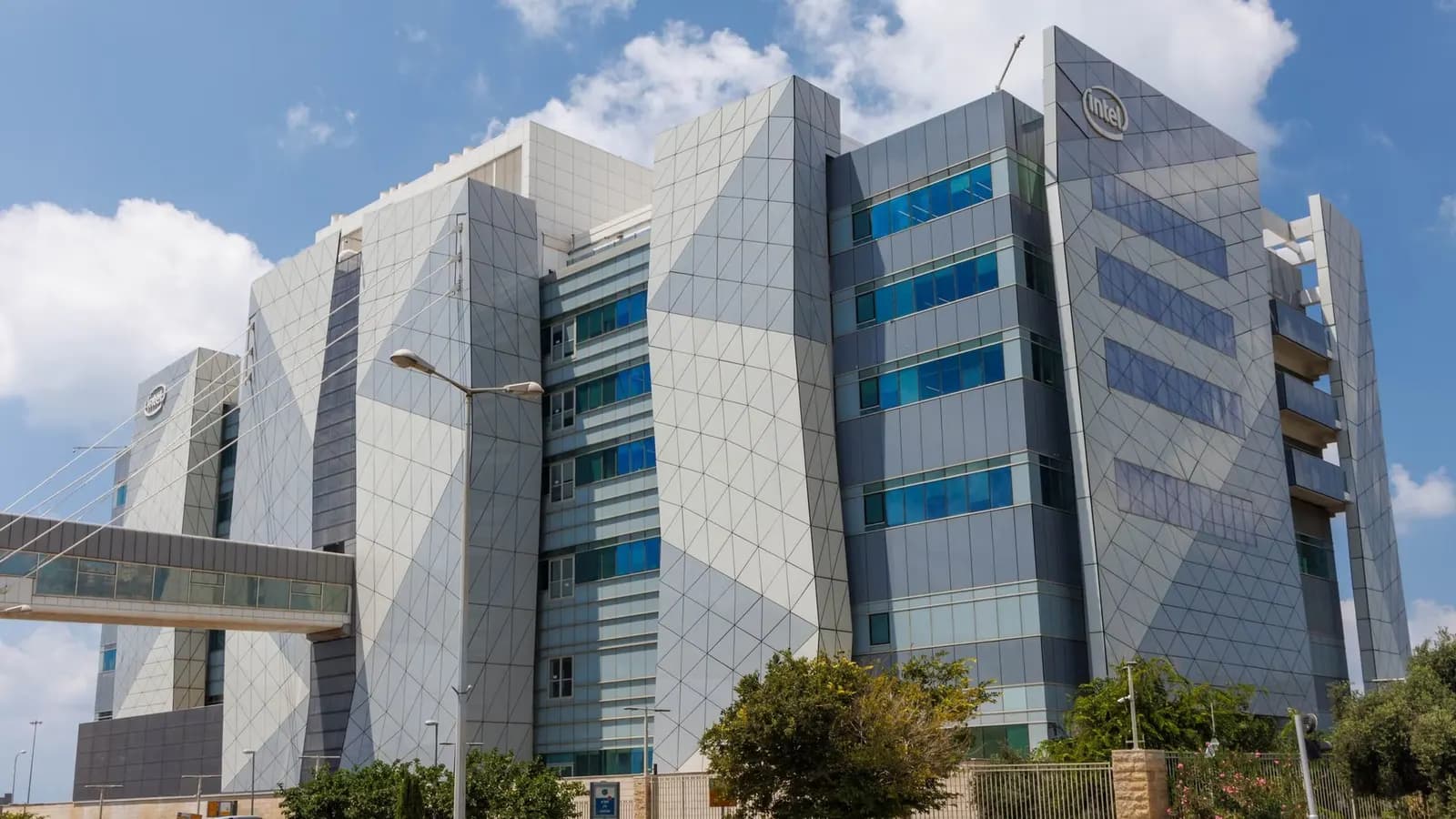
An explosion in mid-October at Intel's Fab 28 facility near Kiryat Gat in Israel has seriously disrupted the company's production plans. Two people were killed and one was seriously injured in the accident. The plant was shut down entirely for about two weeks.
Intel expects the incident to cost roughly $600 million in lost revenue spread across two quarters. The impact is expected to fall mainly on server processors built on its 10nm-class process, and it comes at a time when demand for server chips is running strong.
The loss is split across two quarters
Speaking on the earnings call, Intel's chief financial officer Dave Zinsner said the Israeli plant had been closed for about two weeks and that the company expects production to restart toward the end of the week. Intel forecasts a revenue loss of around $300 million in the fourth quarter of 2026 and a similar amount in the first quarter of 2027. It also expects non-GAAP gross margin to fall by roughly 2 percent in the fourth quarter.
Zinsner stressed that nearly all of the $300 million impact relates to 10nm server products. The margin drop is concentrated in the fourth quarter because of write-offs of damaged product. Wafers that were in the production line when the explosion occurred are being assessed: those that can be salvaged will be set aside, and those that cannot will be booked as a loss. According to Zinsner, most of these write-offs will land in the fourth quarter.
Which Xeon families are affected remains unclear
Intel has not said which Xeon processor families are affected, how many wafers were damaged, or when Fab 28 will return to full capacity. Fab 28 is one of the key plants where Intel manufactures on its 10nm-class and Intel 7 (formerly 10nm Enhanced SuperFin) processes.
Some background: although the compute tiles of Intel's current Xeon 6 processors are made on the Intel 3 process, their I/O tiles are still produced on Intel 7. The company also continues to sell the previous-generation Xeon 5 chips based on Emerald Rapids on the same process. It had already stopped taking orders for Xeon 4, based on Sapphire Rapids, at the end of September.
Other fabs can't fully fill the gap
Besides Fab 28, Intel has other 10nm-capable sites, including Fab 12, Fab 22, Fab 32 and Fab 42 in Arizona. But with demand for server processors strong, the company is struggling to meet it, and it cannot fully offset the lost output of one plant by adjusting production elsewhere. Possible reasons include that the other fabs lack product-specific production qualifications, and that moving production between sites takes time and costs a lot, particularly as Fab 28 itself is about to come back online.
For individual users, uncertainty remains. Intel says the stoppage mainly affects server processors, but it has not said whether shipments of 12th-, 13th- and 14th-generation Core processors, which are built on Intel 7, will be affected. It is also unclear whether Fab 28 produces these products at all. The possibility that the availability of some consumer processors could be affected therefore cannot be ruled out entirely.
Comments
No comments yet. Be the first to comment.