
How Banned HBM Reaches China Inside Ordinary Processors
According to a smuggler, HBM memory soldered onto low-performance processors slips into China through a gap in export controls, then gets pulled off in Shenzhen workshops.
 Merhabyte Newsdesk · · 2 min read
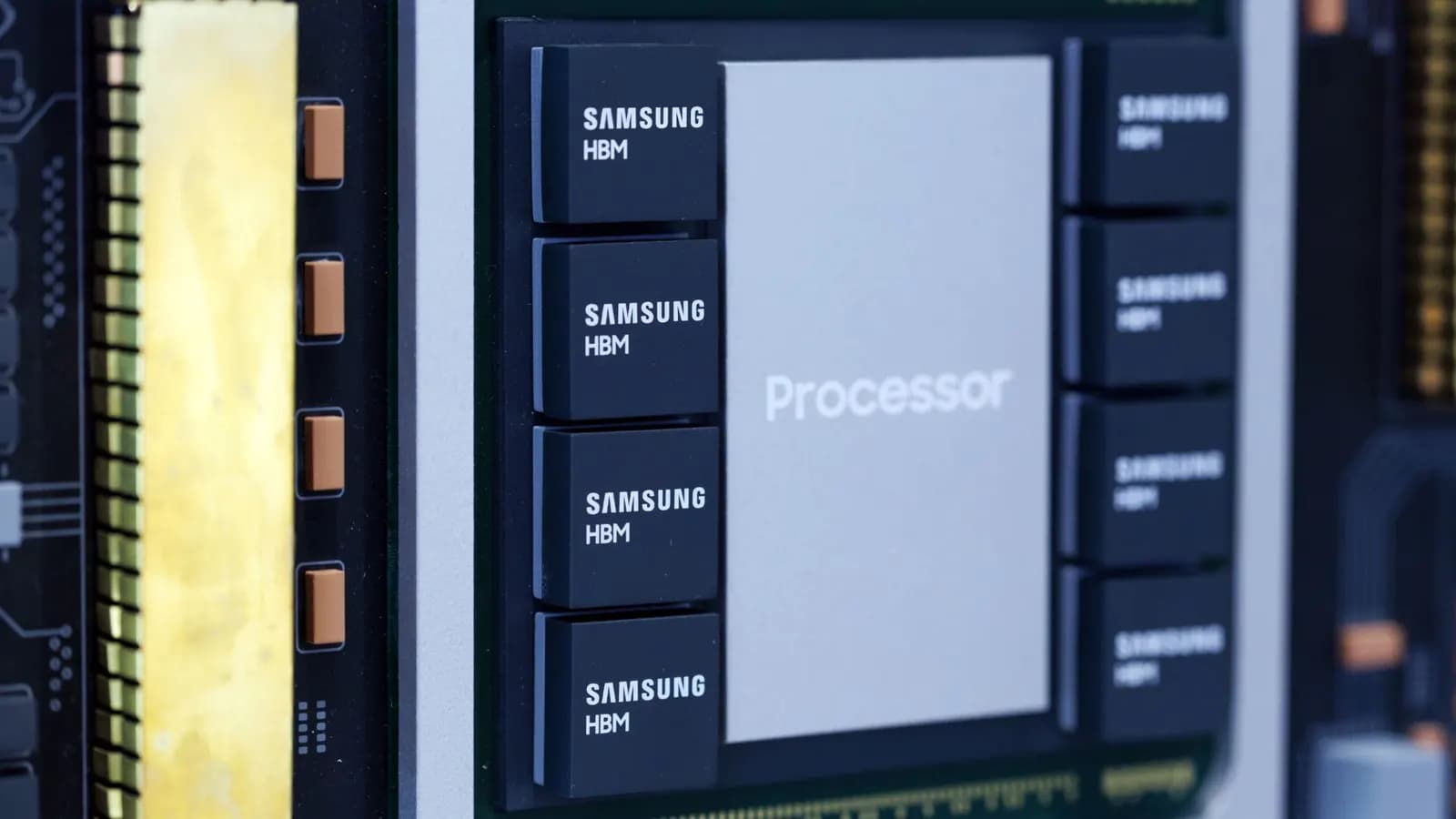
HBM, one of the most critical components in AI accelerators, is restricted from sale to China by both the United States and South Korea. But according to a memory smuggler, a gap in the export rules lets these banned chips into the country anyway.
The trick is simple. The rules look only at the performance of the server processor, not at the other components attached to it. As a result, expensive memory can cross the border without triggering controls, as long as it travels alongside a cheap, weak processor.
How the loophole works
The smuggler reportedly runs a chip design company that makes low-performance, inexpensive processors. These processors fall under US and South Korean export controls, but they are paired with costly HBM chips made by Samsung and SK hynix. HBM on its own is banned from export to China.
Because the rules are based solely on the server processor's performance, the HBM chips embedded in it can head toward China without being flagged. The components that hold the real value move on unnoticed.
From Hong Kong to Shenzhen: the stripping workshops
The processors first reach Hong Kong, then cross into Shenzhen in the luggage of commuters who travel between the two territories every day. In workshops there, technicians heat the boards to soften the solder, carefully lift off the valuable memory chips and discard the rest.
The process is risky and the failure rate is high. Even so, the steep price of HBM makes it profitable. A Shenzhen-based chip broker who connects suppliers with companies looking for HBM says an HBM3E unit sold for a few hundred dollars in China a year ago and now goes for around $4,000. Since an AI chip needs six to eight high-performance memory chips, the broker is making between $24,000 and $32,000 per GPU.
Why demand is so high
Chinese AI labs are struggling with exactly this memory bottleneck in their GPU supply. Domestic maker CXMT has reportedly begun risk production of HBM3E and is expected to move to volume production by the end of the year, but yields are said to remain low, which raises production and supply costs.
Huawei's current top processor, the Ascend 950DT, sells for about $37,000, similar to Nvidia's B200, yet delivers roughly half the performance of the previous-generation H100. Huawei has reportedly said its next flagship, the 960DT, will come close to H100-level performance. The company is said to be unable to buy HBM from Samsung and SK hynix, and Chinese producers cannot yet meet all of the demand. Huawei has reportedly told customers they must source the HBM for their servers themselves. That is likely to push demand and prices higher still, making similar smuggling schemes even more attractive.
Tightening enforcement
As the method spreads, the smuggler worries that South Korean and US authorities will soon act. Washington has taken a hard line on such activity, with significant arrests that reportedly include some Super Micro executives and the CEO of a California-based technology company. Taiwan and Malaysia are also stepping up their anti-smuggling efforts, so it is considered only a matter of time before Seoul follows suit.
Comments
No comments yet. Be the first to comment.