
ULA's Vulcan Fails in Flight, Loses 40 Amazon Leo Satellites
United Launch Alliance's new heavy-lift rocket suffered an anomaly about 10 minutes after liftoff, and the 40 internet satellites it carried never reached orbit.
 Merhabyte Newsdesk · · 2 min read
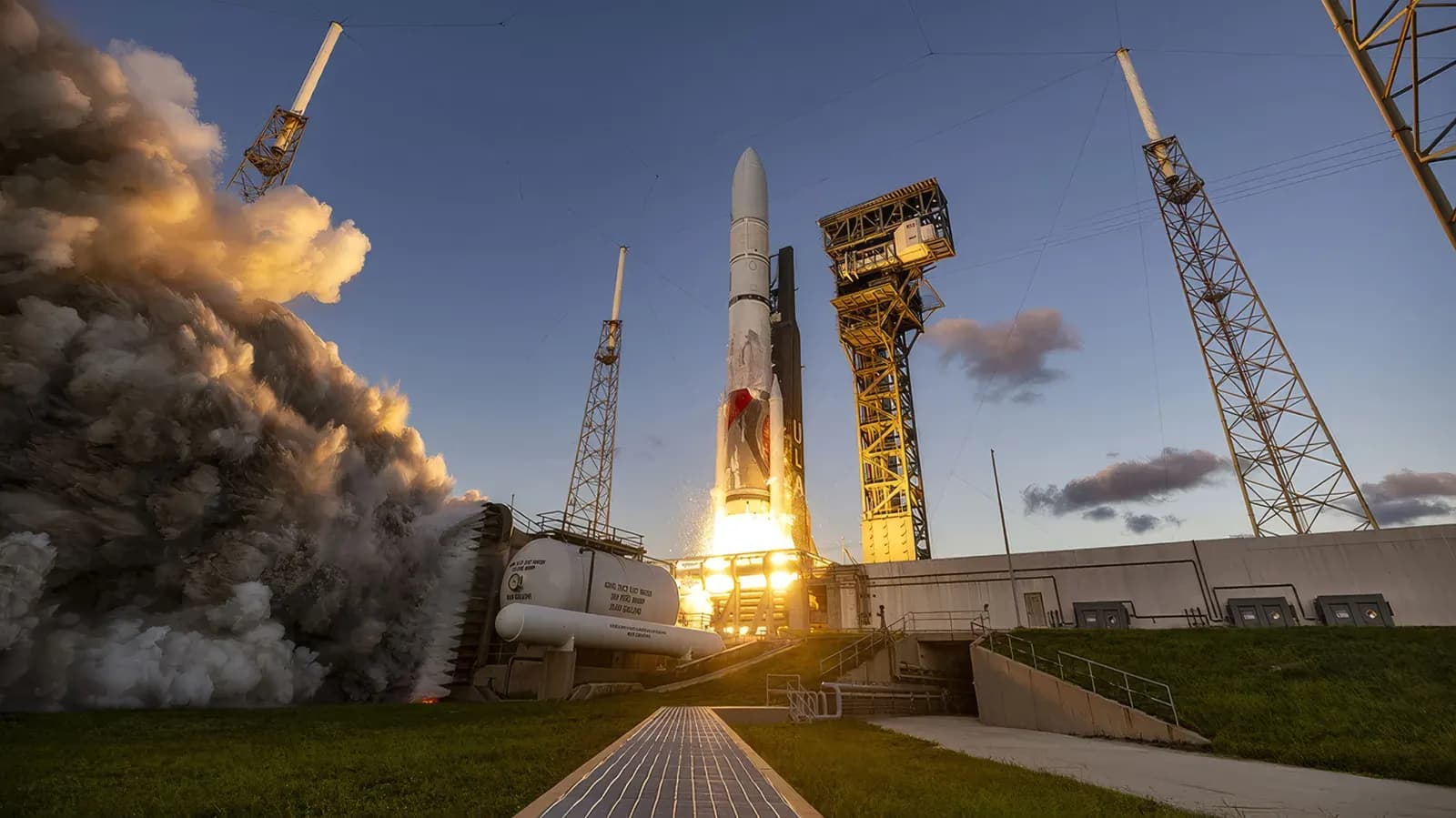
United Launch Alliance's (ULA) new heavy-lift rocket, Vulcan, failed during ascent and the 40 Amazon Leo internet satellites it was carrying were all lost. According to the company, the rocket experienced an anomaly roughly 10 minutes after lifting off from Space Launch Complex 41 and did not deliver the Amazon payload to orbit.
Founded in 2006 as a joint venture between Boeing and Lockheed Martin, ULA had never suffered a launch failure before. The reliability record it built with the Atlas V rocket has now been broken for the first time by Vulcan.
The launch and the moment of failure
The launch had been delayed on Friday because of a fueling issue and was rescheduled for Sunday, November 15, at around noon US Eastern Time. At T-minus 20 seconds in the countdown, controllers called a hold over an unspecified technical problem. It was resolved before the launch window closed, and the rocket left the pad at 12:40.
The solid rocket boosters, which had caused trouble on two earlier flights, appeared to perform normally this time. However, the methane-fueled engines on the first stage were observed to burn longer than expected, based on ULA's projected timeline. After first-stage separation, the engines of the hydrogen-fueled Centaur upper stage ignited for a planned burn of 12.25 minutes. ULA said the anomaly apparently occurred at this stage.
ULA's statement and the investigation
In a post on X, ULA said it would work closely with its customer and the relevant agencies to identify the cause, determine the appropriate corrective action and return to flight as quickly as possible. The company added that, because the event had only just occurred, it did not yet have enough concrete data to understand what went wrong.
ULA also said it would work with full transparency, and that customers would be able to follow an investigation that applies a rigorous method and corrective action. Vulcan, which is more powerful and more complex than the Atlas V, will now be examined in detail by engineers, and the rocket is reportedly facing a possible grounding.
A heavy blow for Amazon Leo
The loss is a major setback not only for ULA but also for Amazon Leo, the satellite internet system designed to compete with SpaceX's Starlink network. Leo has 38 launches planned on Vulcan, following eight successful missions on the Atlas V. Many of the Vulcan missions are now expected to be postponed.
Amazon's other launch provider, Jeff Bezos's Blue Origin, also suffered a mishap in May when its New Glenn rocket exploded on the launch pad; 24 flights have been reserved on that vehicle. The Federal Communications Commission (FCC) requires Amazon Leo to have 1,600 satellites in orbit by July 31, 2026, but only about 390 are currently in service. The company had been pursuing its goal of reaching 3,232 satellites by July 2029, but the Vulcan failure could make that target harder still.
In a statement in July, Amazon said that no operator could have foreseen delays hitting all three heavy-lift launch programs at once and repeatedly, and that those delays had used up the time buffers it had built into Leo's schedule. The Vulcan failure adds to those delays.
Add as a preferred source on Google
Comments
No comments yet. Be the first to comment.


