
Japan's Fugaku supercomputer offline after suspected cyberattack
RIKEN took Fugaku offline after attackers apparently breached its status dashboard and reached servers holding user credentials. Thousands of users' details may be exposed.
 Merhabyte Newsdesk · · 2 min read
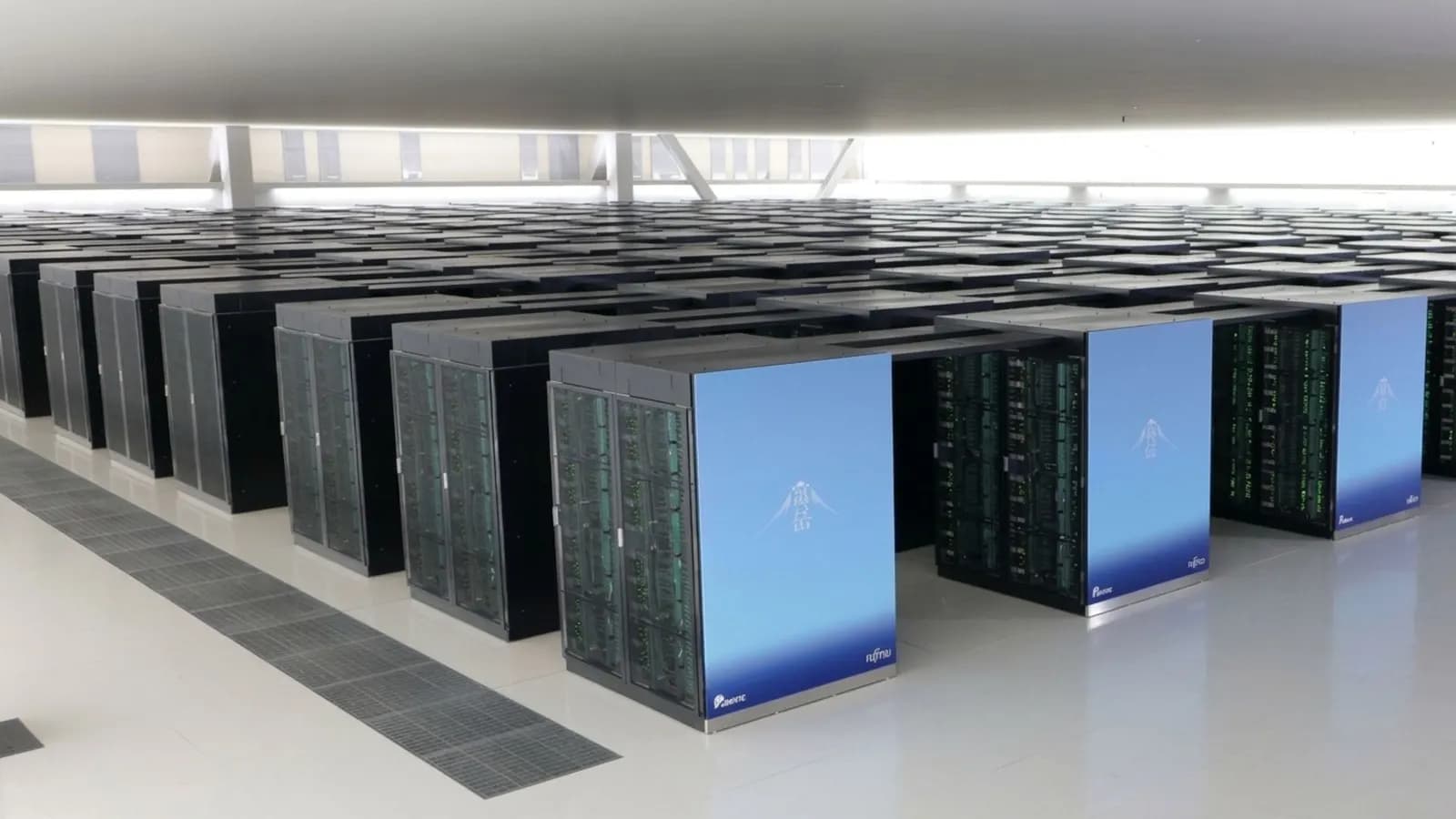
Japan's Fugaku supercomputer, one of the most powerful scientific computing facilities in the world, has been taken offline following a suspected cyberattack. According to the investigation so far, the attackers got into the network by targeting an online dashboard that displays the machine's operating status, and from there reached servers where user information is stored. That a facility this critical could be breached in such a way is raising concern.
RIKEN, the research institution responsible for Fugaku, is still working to establish how far the attackers moved inside the network and what data they obtained. The organization believes an unknown party attacked the service between November 10 and 13, 2026, and then accessed servers containing registered user information.
The attack began at a status dashboard
Investigators say the intrusion started with the online dashboard showing Fugaku's operational state. The compromised systems held names, email addresses and the credentials used to access both Fugaku and computing services run by outside organizations. In other words, a single entry point gave the attackers access to a pool of identity data covering a large number of users.
Malware was also found on the affected servers, which suggests the attack was not confined to the dashboard. RIKEN says the details of 4,222 Fugaku users and 375 users of its smaller system, Rikyu, may have been exposed.
An access attempt with stolen credentials
On November 13, 2026, someone tried to access Fugaku using compromised login details. RIKEN responded by taking the machine offline immediately. The organization is also contacting operators of other supercomputers whose services may have been affected through credentials stored on the breached servers.
Those operators are checking for unauthorized access, but RIKEN has not confirmed that any of the external computing systems were breached. It says it has found no evidence that research datasets were exposed. Even so, it has not yet determined which information left its systems, and it is still examining whether the records include details belonging to outside organizations or individuals.
Why Fugaku matters
Fugaku consists of 158,976 compute nodes, each with a 48-core processor and 32 GiB of usable memory. In total, 7,630,848 processor cores and more than five petabytes of memory are available for scientific workloads. The system ranked first on the international Top500 supercomputer list for two consecutive years, from 2020 to 2022, and currently sits ninth on the latest list. RIKEN's smaller system, Rikyu, runs on 288,000 processor cores.
The shutdown is causing serious disruption for researchers who had scheduled access in advance. Given the computing capacity of both platforms and their access to sensitive research environments, the running of unauthorized workloads could cause significant problems.
The incident follows a series of cyberattacks in recent months that have hit businesses, telecom providers, cloud services and public bodies in Japan. Those cases have pushed the government in Tokyo to set aside emergency funding to strengthen the country's national cybersecurity capabilities.
Add as a preferred source on Google
Comments
No comments yet. Be the first to comment.


