
Turkey to Install 54-Qubit IQM Radiance R3 Quantum Computer
Industry and Technology Minister Kacır announced that the country's largest quantum computer will be installed at TÜBİTAK and brought online in 2027.
 Merhabyte Newsdesk · · 2 min read
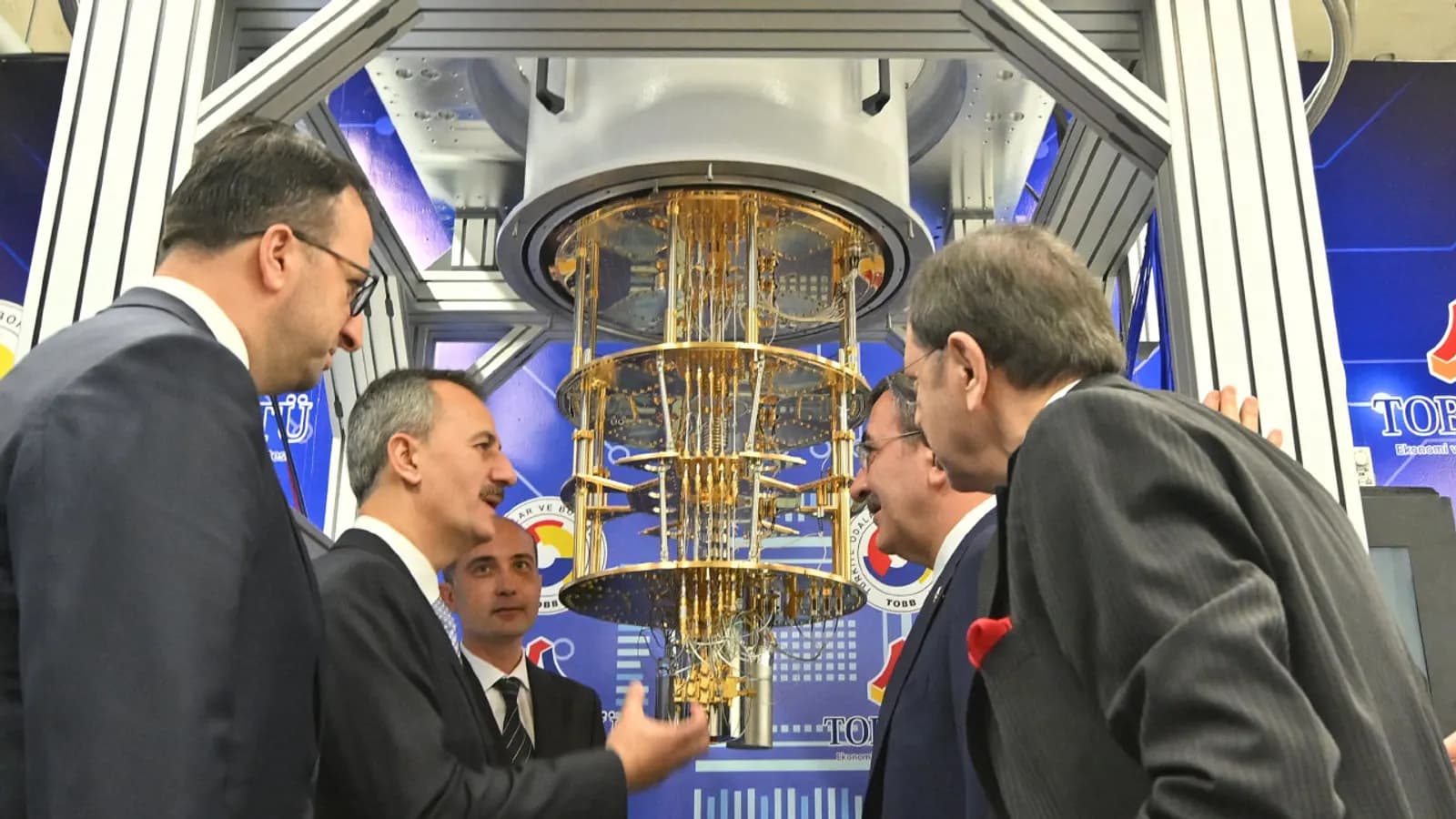
Industry and Technology Minister Mehmet Fatih Kacır has announced that Turkey's largest quantum computer will be installed at TÜBİTAK, the Scientific and Technological Research Council of Turkey. Kacır made the announcement on his X account, saying an important project had been signed for this purpose.
According to the announcement, the system will be brought online in 2027. The machine will be a 54-qubit IQM Radiance R3 quantum system. Kacır said the step marks a major move toward placing Turkey among the 15 leading countries in quantum computing.
54-qubit system to go online in 2027
Kacır's post stressed that the project is being carried out in line with the National Technology Move vision, and said Turkey is building its future in quantum technologies. TÜBİTAK was named as the site where the system will be installed.
Quantum computers work with units called qubits rather than classical bits. Because qubits can represent multiple states at once through superposition, they have the potential to solve certain classes of problems far faster than classical systems. Qubit count is regarded as one of the key measures of such a machine's capacity, which makes the installation of a 54-qubit system in Turkey a notable step for the country's computing infrastructure.
In Kacır's words, the IQM Radiance R3 is a big step toward Turkey joining the world's 15 leading countries in quantum computing. The minister named 2027 as the year the system will come online.
Control over hardware, data and intellectual property
Kacır said that thanks to the in-house infrastructure, the hardware, the data and all intellectual property rights generated in the projects run on the system will remain fully under their control. This suggests the machine will be operated as the institution's own infrastructure rather than as an outside service.
The minister also said they will develop domestic quantum algorithms and software in critical areas ranging from artificial intelligence and cybersecurity to advanced materials and complex optimization problems. The goals therefore extend beyond installing the hardware to building homegrown algorithms and software in these fields.
Quantum algorithms are generally seen as most promising in areas such as optimization and simulation, where classical computers struggle. The fields Kacır listed, including AI, cybersecurity and advanced materials, are among those expected to benefit from this kind of computing power.
Computing power for universities and industry
The announcement said the system will give universities, research centers and industry world-class computing power. According to Kacır, this will strengthen skilled human resources and technological independence. He closed his post by wishing that the project would prove beneficial for the country, the scientific community and the national technology ecosystem.
The post gave no details on the investment amount or on how access to the system will be arranged. The only timeline given was that the system will go online in 2027.
Add as a preferred source on Google
Comments
No comments yet. Be the first to comment.


