
Nvidia Rubin HPC packs 50,000+ CUDA cores, but not until 2028
Unveiled at SC26, Rubin HPC offers roughly three times the CUDA cores of the RTX 5090. The accelerator is built for scientific simulation and is expected to reach systems in 2028.
 Merhabyte Newsdesk · · 2 min read
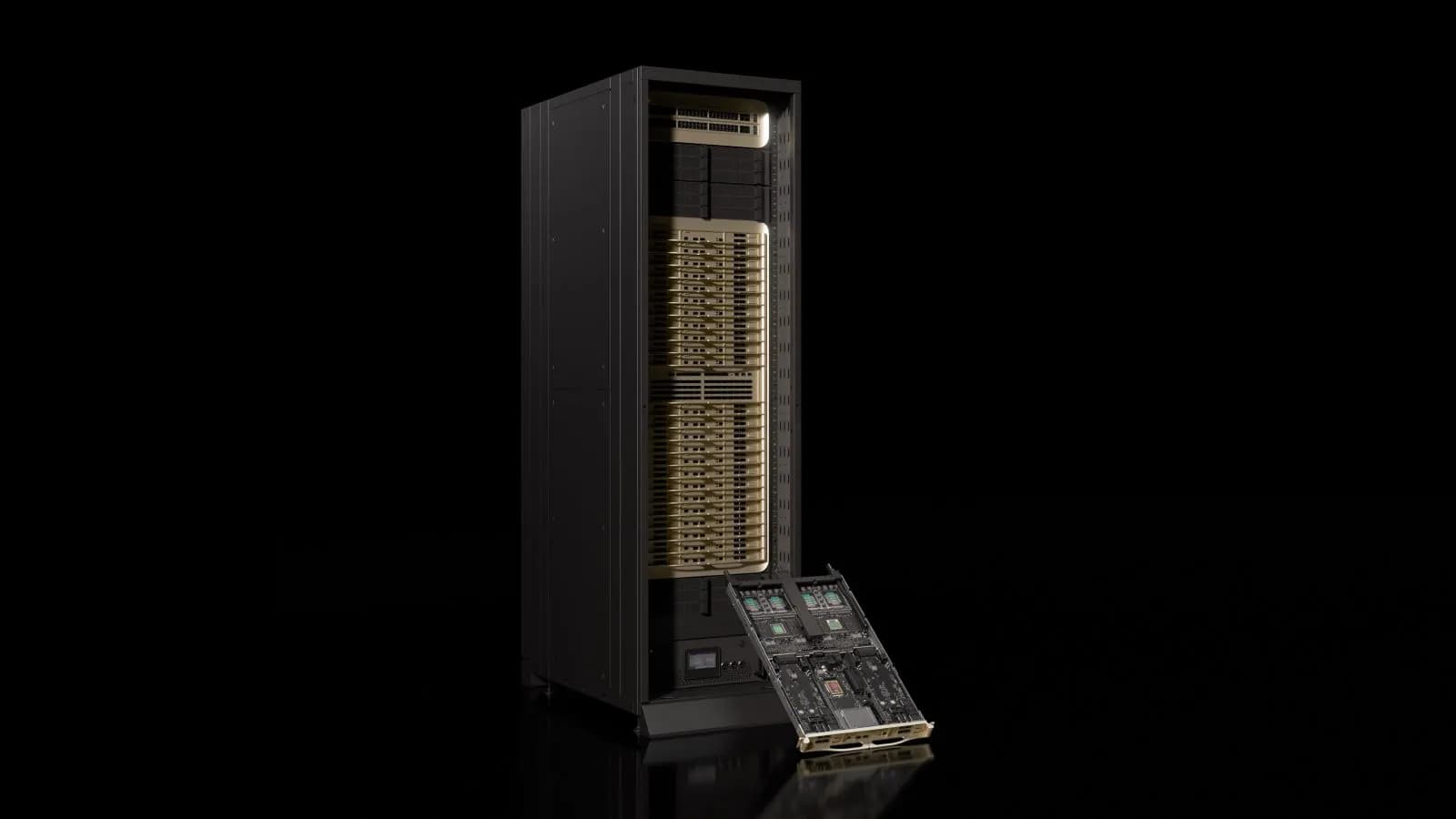
Nvidia has announced a new processor for scientific computing at the SC26 supercomputing conference. The accelerator, called Rubin HPC, contains more than 50,000 CUDA cores within a single GPU package. That is roughly three times the 21,760 CUDA cores of the GeForce RTX 5090.
The chip is not a product for gamers, however. Rubin HPC is designed for heavy simulation and data analysis workloads, not for consumer gaming or conventional desktop graphics applications. Nvidia also expects the accelerator to reach deployed systems only in 2028.
A specialized member of the Vera Rubin platform
Rubin HPC will join Nvidia's Vera Rubin platform as an accelerator specialized for technical workloads. The company says the chip will help researchers run simulations that study materials, molecules, industrial designs, climate systems and other complex scientific processes.
The design pairs a large number of processing cores with faster data movement between compute components. According to Nvidia, this balance is meant to keep processing units from sitting idle while they wait for information, a bottleneck known to hurt data-intensive scientific computing.
The 2028 target means a long wait for organizations. It will take several years before the chip's real-world performance in actual systems can be assessed.
Sparse data acceleration and a new NVLink
The chip also includes sparse data acceleration, a feature aimed at improving operations that pull a limited amount of information from much larger datasets during computation. By Nvidia's technical description, such operations show up in sparse matrices, stencil computations, sorting and reduction tasks. These jobs are common in simulation, analytics and engineering software, where the time needed to access information can affect how quickly a job finishes.
The accelerator also adopts the seventh generation of Nvidia NVLink. NVLink is designed to improve communication between GPUs working together inside larger computing systems, which matters when a complex simulation is spread across multiple processors. Nvidia did not, however, share a throughput figure for this implementation.
AI agents and simulation speed
Nvidia ties the hardware to the growing use of AI agents in science and engineering. Software can propose candidate materials, molecules and designs, and researchers can then evaluate those candidates in simulations before committing resources to lab experiments or physical prototypes. Faster computation could let teams examine more possibilities. Actual gains will depend on software, system configuration and measured performance.
Ian Buck, Nvidia's vice president of hyperscale and high-performance computing, said faster simulation means faster discovery for agents working in science and engineering. According to Buck, Rubin HPC accelerates the simulations agents use to test ideas and decide their next steps, helping scientists and engineers explore more possibilities and bring breakthroughs closer.
The company also points to its CUDA-X libraries, which provide software implementations optimized for algorithms used in simulation, scientific research and data analysis. These tools are said to work alongside Rubin HPC to speed up computations launched by AI agents and other scientific applications.
Independent testing has yet to show how much faster specific workloads will run. Nvidia's claims about practical performance therefore remain to be verified.
Add as a preferred source on Google
Comments
No comments yet. Be the first to comment.


