Tech Hit by Its Worst Outage Streak in 13 Years
From Microsoft 365 to iCloud, flights to payments, services failed one after another. Experts blame shared infrastructure rather than AI directly.
 Merhabyte Newsdesk · · 3 min read
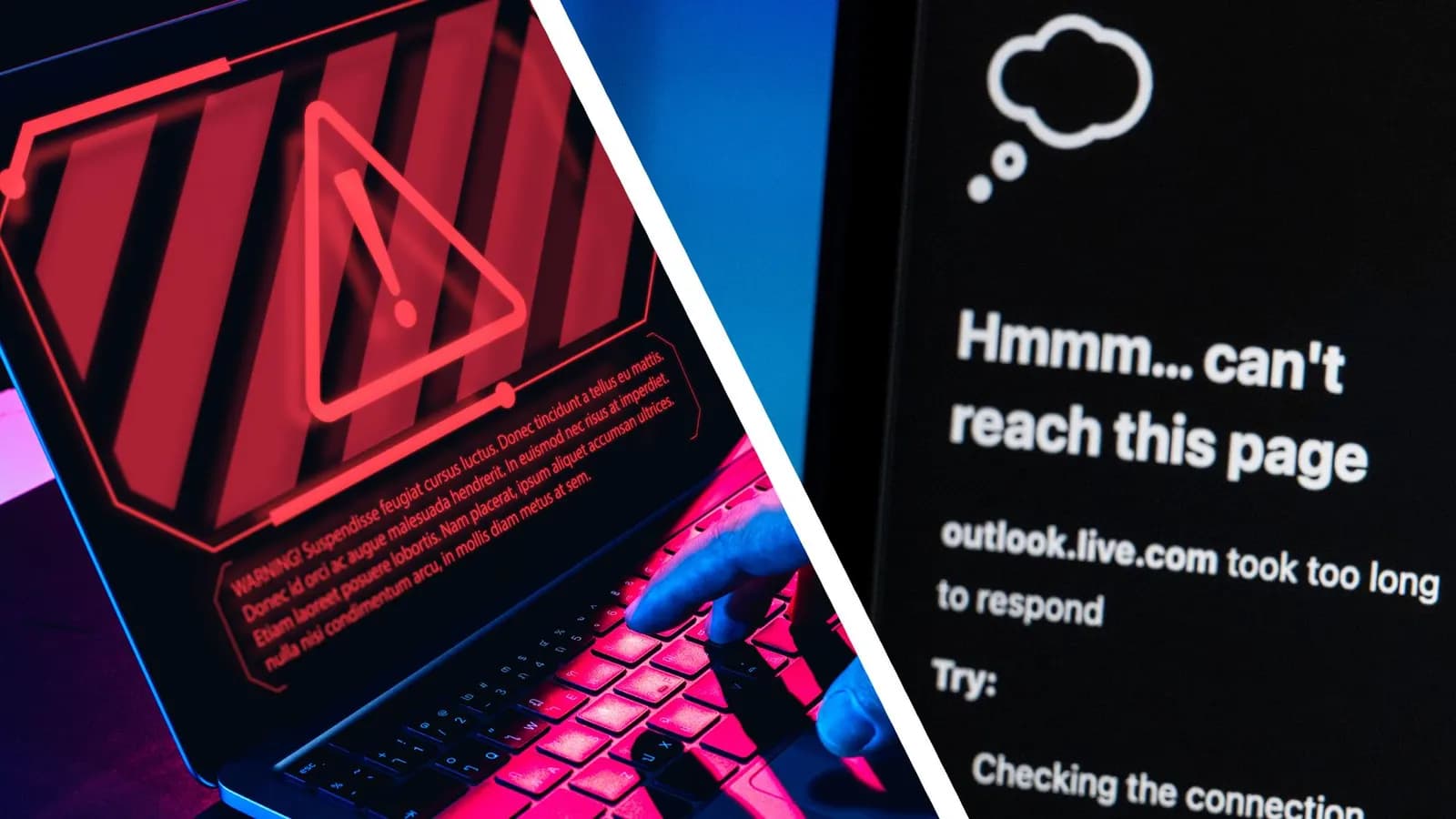
Since November 12, the tech world has been rocked by a run of back-to-back failures. Microsoft 365 services, Outlook included, faltered worldwide. The US Federal Aviation Administration (FAA) halted departures nationwide. United Airlines suffered a serious technical problem, and JPMorgan Chase saw payment disruptions. Apple's iCloud platform and other services, the Marriott hotel network and internal networks at the US National Security Agency (NSA) were also hit during the same period. Separately, the White House removed its cybersecurity chief, Sean Cairncross.
According to an analysis by AI researcher Rohit Krishnan, who went through the data, this may be the worst string of outages since August 2013, when Barack Obama was in the White House and Google's latest flagship phone was the Nexus 4. So is the cause a rise in cyberattacks, errors born of AI use, or something else entirely?

What the numbers show
Luke Kehoe of Ookla, the owner of outage tracker Downdetector, says the past week was unusually heavy compared with the previous 12 months. In the seven days up to November 16, Americans submitted roughly 6 million reports, more than any other week in the period. The number of services with reported problems on Downdetector also passed that level within just a few weeks.
Krishnan, looking at the figures himself, says recent levels are high but not an unprecedented peak. In his view, some of the alarming headlines we see every day stem from recency bias, which makes recent events look bigger than they are. The streak is unusual and worrying, he says, but not without precedent. David Wang of Tetrate says it is hard to tell whether outages are becoming more frequent, but the impact of each one is growing. Organizations, he argues, should prepare for more disruptions, not fewer.
Official explanations differ widely
Not every company has explained what happened, and the reasons that have emerged look very little alike. Microsoft's problems are attributed to server faults, the FAA's to overloaded legacy hardware, and JPMorgan Chase's to a bug in on-premises software. The bank's payment issues are being treated as separate from its recent cyberattack. At the NSA, planned maintenance and security patches were on the agenda, while at Apple a faulty internal software update came to the fore.
US Secretary of State Marco Rubio says there is no evidence of a link between the incidents; the only common thread is that they all involve technologies millions of people use every day. Still, there is one binding factor: our digital lives rest on a surprisingly small number of core platforms. Findlay Whitelaw of cybersecurity firm Exabeam says cloud, authentication and payment platforms sit beneath many of the services we use daily, so when one falters, many people are affected at once and the event is told as a wave. Such clustering deserves to be taken seriously, Whitelaw says, but timing alone does not prove a shared cause or a coordinated attack.
Whitelaw likens modern systems to the road network of a city made up of thousands of interconnected services. A small change at a single intersection, such as a configuration update, a certificate renewal or a network rule, can cause a traffic jam that spreads far beyond where it started.
What role does AI play?
Although the official cause of these outages is not AI-driven cyberattacks, AI is described as a contributing factor. Because AI speeds up code development, vulnerabilities are being found and patched at an unprecedented pace. Developers have to find and fix problems so quickly that mistakes can slip in.
Gunter Ollmann of security firm Cobalt says the industry is still dealing with the long tail of what is now called the April "Mythos moment," which showed that AI can surface vulnerabilities at unprecedented scale. A few months ago, he says, security teams could test updates for longer and roll them out gradually; now that luxury is gone, because attackers use the same tools to find the flaws.
Steve Povolny of Exabeam says the more plausible AI scenario is a person using a tool to speed up their work, or an automated change deployed without enough oversight that breaks something on its own. In other words, AI agents are not being directly blamed; in either case, Povolny says, a human is in control. He adds that the affected services share a great deal of infrastructure: the same cloud providers, DNS, certificates and network equipment vendors, so a single bad update or faulty piece of equipment can bring down many seemingly unrelated names. The FAA problem, too, has reportedly been traced to network hardware.
Add as a preferred source on Google
Comments
No comments yet. Be the first to comment.