iPad mini now just $50 cheaper than iPad Air: which to buy?
With its OLED screen and a full redesign, the eighth-generation iPad mini now sits only $50 below the 11-inch iPad Air. Choosing between them is no longer straightforward.
 Merhabyte Newsdesk · · 3 min read
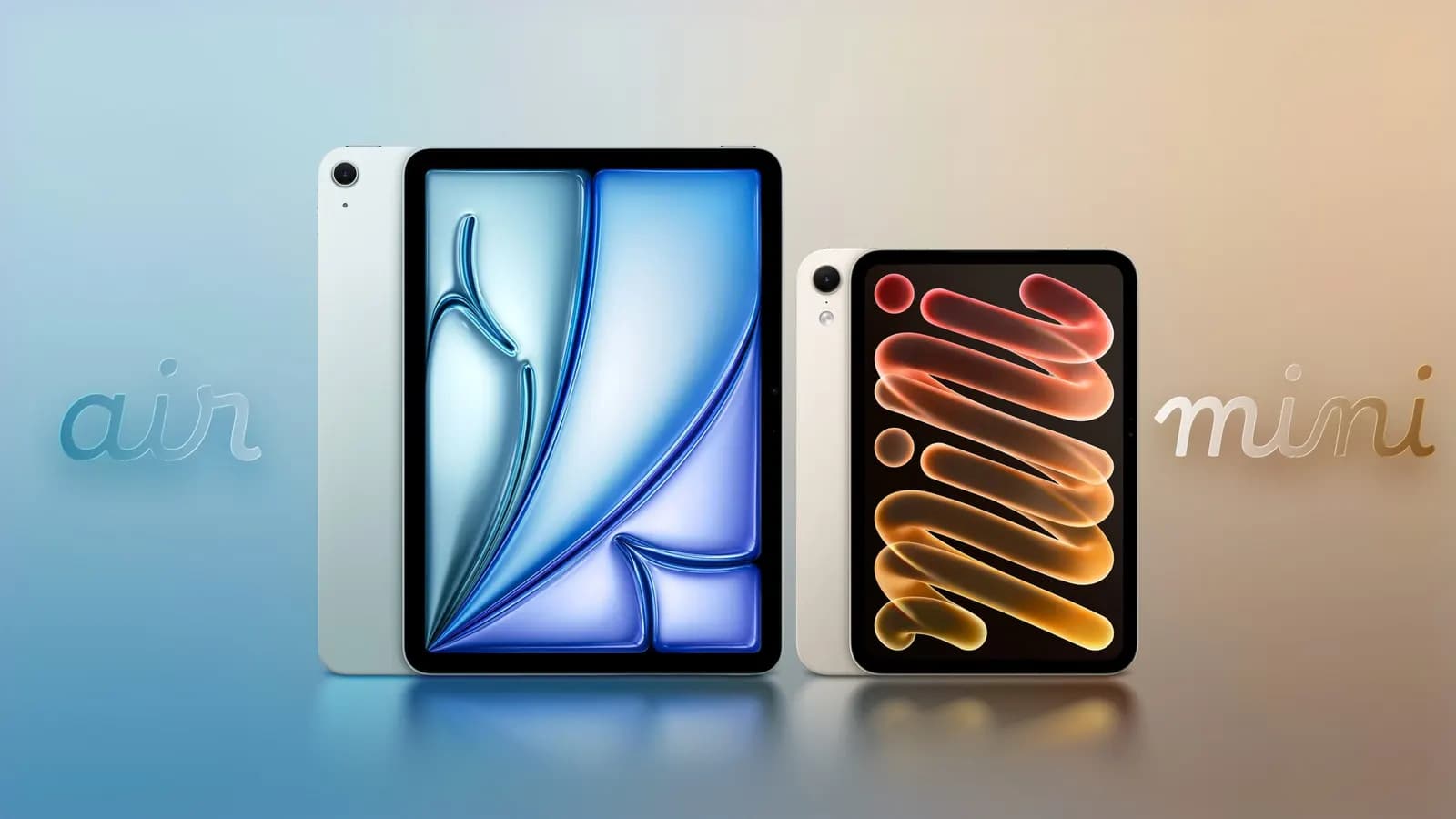
Apple has refreshed both the iPad mini and the iPad Air this year, and choosing between them is no longer as simple as it used to be. Following Apple's price increases in June, the 11-inch iPad Air starts at $749 and the 13-inch model at $949. The new iPad mini starts at $699, leaving just $50 between the mini and the 11-inch Air.
As the price gap has narrowed, the balance of features has shifted too. The eighth-generation iPad mini, introduced in October, arrives with a larger OLED display, a thinner and lighter body, the A20 chip, an optional nano-texture coating and a front camera repositioned along the landscape edge. The iPad Air, which received the M4 chip in March, stands out with its larger screen and Magic Keyboard support.
Shared hardware and matching memory
The two tablets share a good deal of hardware. Both have Touch ID in the top button, support for Apple Pencil Pro and the USB-C Apple Pencil, and Pencil hover. Both also offer a 12 MP Center Stage front camera with an f/2.0 aperture placed on the landscape edge, the N1 wireless chip, Wi-Fi 7, Bluetooth 6, Thread support and a USB-C port with transfer speeds of up to 10 Gb/s.
The new iPad mini reaches the same level as the Air in memory, with 12 GB of unified memory. Stated battery life is identical as well: up to 10 hours of web browsing or video playback over Wi-Fi, and up to nine hours of web browsing on cellular. One notable detail is that, despite the mini's move to OLED, neither model has ProMotion.
Display, chip and size: where the mini stands out
The iPad mini's 8.5-inch Super Retina XDR OLED display offers a 2316x1512 resolution at 326 ppi, with 600 nits of SDR and full-screen HDR brightness, 1,200 nits of peak HDR brightness and a 2,000,000:1 contrast ratio. A nano-texture glass option is available on the 256 GB and 512 GB models for an extra $100. The iPad Air keeps its LED-backlit Liquid Retina display, with maximum SDR brightness of 500 nits on the 11-inch and 600 nits on the 13-inch, and pixel density remains at 264 ppi. The mini also carries IP67 water and dust resistance, rated to a depth of 1 meter for up to 30 minutes; no such rating is listed for the Air.
On the chip side, the mini uses the A20 Pro and the Air the M4. The mini's 128 GB and 256 GB models have a 5-core CPU, while the 512 GB model has a 6-core CPU; the Air has an 8-core CPU and a 9-core GPU. The Air also supports an external display at 6K resolution and 60 Hz, whereas the mini is limited to 4K.
The physical difference is substantial. The mini weighs 255 grams and is 5.4 mm thick, against 464 grams for the 11-inch Air and 616 grams for the 13-inch Air. That makes the mini far better suited to holding for long stretches and slipping into a small bag.
Who is the iPad Air still for?
The iPad Air's main trump cards are a larger workspace, Magic Keyboard support through the Smart Connector, and storage options of up to 1 TB. The mini works with Bluetooth keyboards but has no Smart Connector. The Air's design continues the look adopted in 2020, while the mini has gained a new, thinner and lighter OLED design.
For anyone who wants a handheld tablet to complement a laptop or desktop, the new iPad mini is now the more attractive option. Its lower price, OLED screen and light weight all support that case. Unless you specifically need the big work area and keyboard support, or can't afford to wait for the Air's successor, recommending the current Air has become harder.
Comments
No comments yet. Be the first to comment.