Intel CEO Lip-Bu Tan Reportedly Discussed Cooperation With AMD's Lisa Su
Intel's Lip-Bu Tan and AMD's Lisa Su reportedly talked through possible areas of collaboration. No details were shared and no new deal has been announced.
 Merhabyte Newsdesk · · 3 min read
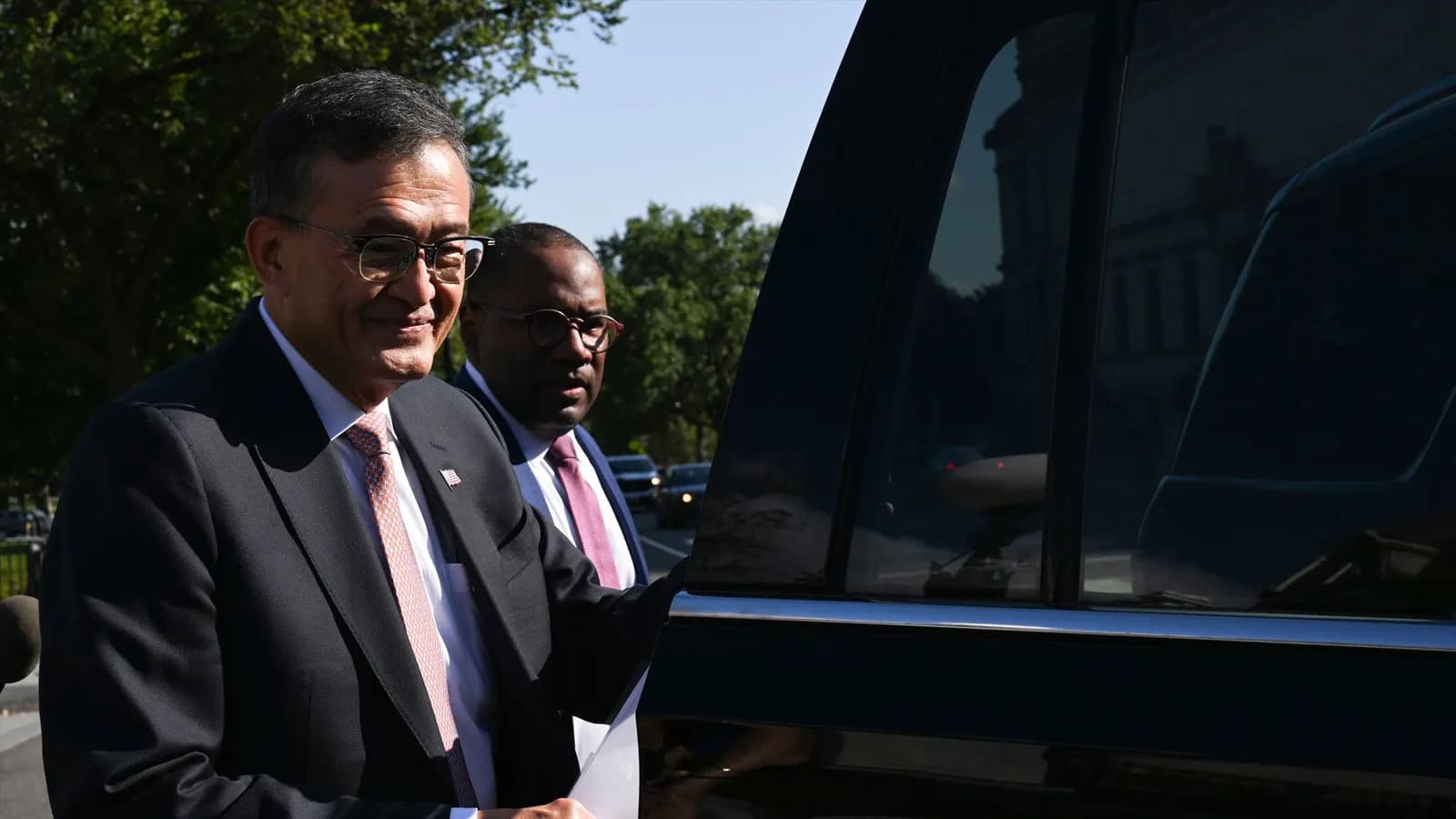
Intel and AMD have competed for decades in PC and data center processors, yet they have shown no reluctance to sit down together when their interests align. According to reports, Intel CEO Lip-Bu Tan has discussed possible areas of cooperation with AMD chief Lisa Su. At a time when Intel is working to regain strength in the semiconductor industry, the conversation hints that another entry could be added to the list of partnerships between the two companies.
The information comes from a recording of an interview Tan gave on October 24. In it, he laid out Intel's plans to rebuild its CPU business, develop chips tailored to customer workloads and draw more customers to its foundry operations. He did not, however, say publicly which areas of collaboration with Su were discussed.
Tan's plan: CPU leadership and custom silicon
According to Tan, Intel has traditionally built its business around its own processor roadmaps, but it now needs to be more flexible because customers are looking for silicon designed for specific workloads. He pointed to the Xeon processors as one example of this shift and said development of GPUs and accelerators is also continuing. He stressed that he is determined to take back leadership in CPUs.
Tan said Intel used to refuse to change its products to fit customer needs out of pride, and that he has reversed that approach. He said he is putting weight on this fast-growing area. The strategy is not limited to classic CPUs: ASICs, co-packaged optics (CPO), physical AI and advanced packaging were named as potential growth areas. Tan aims for two or three of these to eventually account for roughly 10 percent each of Intel's revenue.
18A and 14A on the foundry side
Tan said Intel's 18A manufacturing process has reached volume production and that development of the next-generation 14A process is progressing strongly. The company had already released version 0.5 of the process design kit (PDK), which gives chip designers the technical information and tools they need. Version 0.9 is next, with version 1.0 targeted for volume production in early 2027.
Tan said several customers want to scale their work with Intel's foundry services, but he did not disclose who they are or how large any potential production orders might be. In January it was reported that two prospective customers were evaluating 14A test chips, with firm supplier decisions expected between the second half of 2026 and the first half of 2027.
Tan described the foundry business as one that depends on trust as much as on technology. Customers hand over the wafers for products their own revenue depends on, so delays or production problems carry heavy costs. He also recounted a customer who waited six to eight months for him to become CEO and then listed 15 areas where Intel was falling short. After addressing the problems one by one, he said, the customer agreed to deepen its relationship with Intel.
Existing cooperation between Intel and AMD
The two companies working together is nothing new. In October 2024, Intel and AMD, along with other technology firms, formed the x86 Ecosystem Advisory Group. The group aims to coordinate improvements to the x86 instruction set architecture and make it easier for hardware and software developers to support both companies' processors. Within that framework the companies have also worked together on Advanced Matrix Extensions and other x86 capabilities.
The collaboration has recently extended to AI software as well. Last week it emerged that AMD had integrated its ZenDNN optimizations into Intel's open-source oneDNN library. The step brings the two companies' CPU optimization work for PyTorch AI inference onto a common software path. The companies cooperate on shared technologies while continuing to compete for customers. For now, no new agreement has been announced as a result of the talks.
Comments
No comments yet. Be the first to comment.