
Modders Lift Half-Speed AI Cap on RTX 20, 30 and 40 Cards
Modders have used a firmware flaw to remove the half-rate matrix limit on some RTX 20, 30 and 40 series cards. Peak figures double, but real-world gains are much smaller.
 Merhabyte Newsdesk · · 3 min read
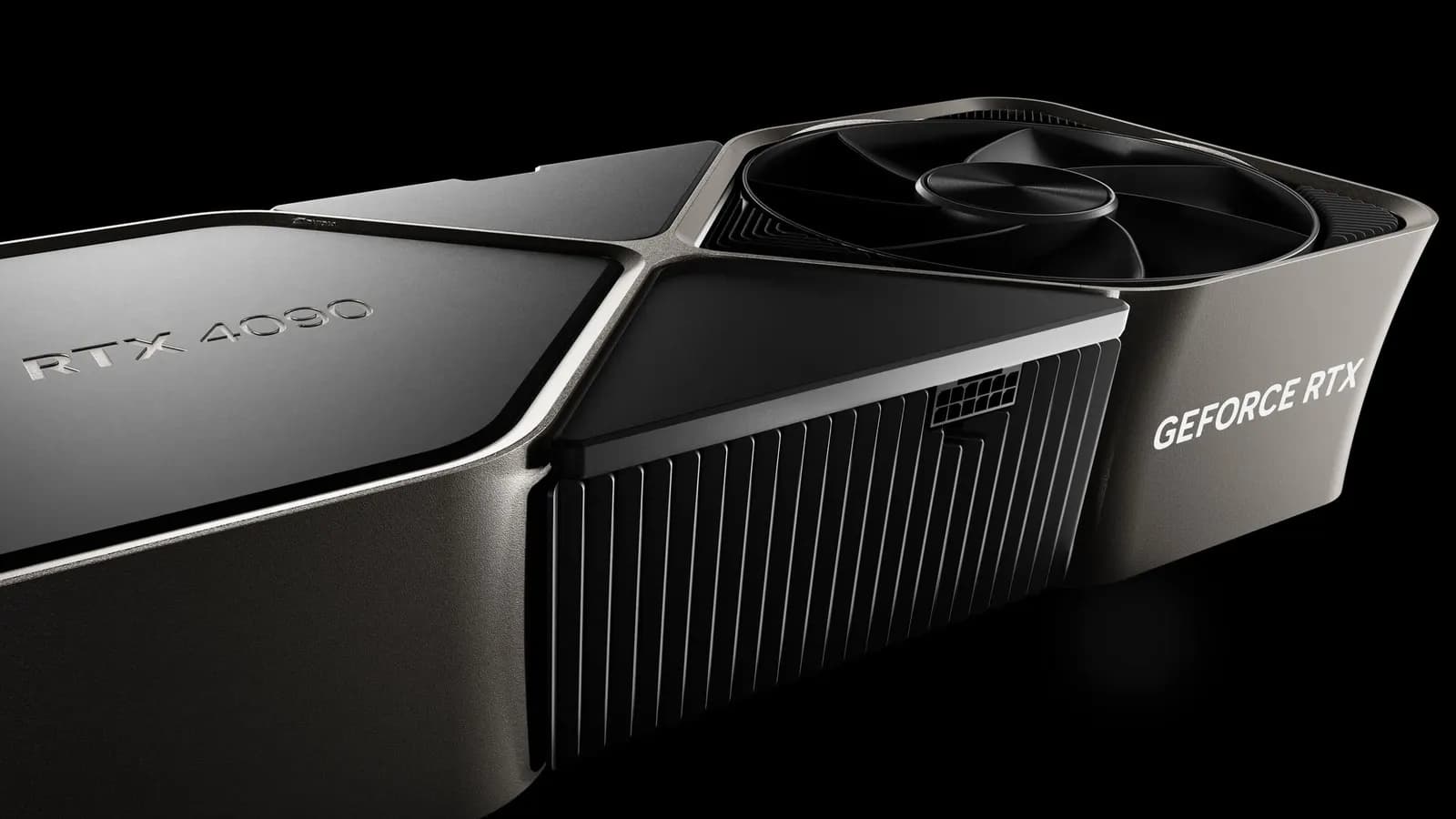
Modders have found a way to remove the half-speed AI performance cap that Nvidia applies to its RTX 20, 30 and 40 series GeForce cards, using a firmware vulnerability. According to Nvidia's own published specifications, the cap limits FP32-accumulate matrix operations to half the rate of each card's FP16-accumulate throughput. The projects exploiting the flaw restore native matrix throughput, which can speed up prompt processing and image generation.
On paper the RTX 4090 sees a doubling of peak throughput, but gains in real workloads fall noticeably short of that. Token generation in chatbots stays roughly the same, because it is bound by memory bandwidth.
Which cards and projects are covered
The cap is absent from Nvidia's Turing- and Ampere-based professional cards. Three separate projects exist to remove it, each offering an unofficial Linux module specific to its own generation. On Windows, experimental builds taking a different approach are still being worked on.
For Ampere, the gpu-unlock project lists device IDs for the GA102, GA103, GA104 and GA106 families. For Ada Lovelace, the gpu-unlock-ada fork covers the RTX 4090, while the RTX 4090 D, 4070 Ti Super and 4060 Ti 16GB are mentioned as experimental. The turing-unlock project, adapted from gpu-unlock, works with the RTX 2080 Ti; other Turing cards were added untested, and because Turing lacks BF16 support, only FP16 is affected. The RTX 3070 Ti and GA103 cards have not been tested, and one RTX 3080 Ti 20GB OEM card stayed at half rate. Blackwell-based RTX 50 series cards are not supported; the gpu-unlock developer describes that series as out of scope.
How big is the performance gain
The most striking peak numbers come from the RTX 4090. In the Ada fork developer's measurements, the card went from 165.6 TFLOPS to 331.6 TFLOPS in FP16 and from 165.5 TFLOPS to 330.6 TFLOPS in BF16. But in an independent user's matrix-multiplication test cited in the same project's description, median cuBLAS GEMM improvements were 12-34 percent in FP16 and at most 20 percent in BF16. A single RTX 4070 Ti tested with a separate Windows port saw matrix-multiplication gains of 80.1 and 76.4 percent; the project notes the difference may stem from power limits.
On an RTX 3090 Ti running a modified Nvidia driver, one user saw gains of 35 percent in FP16, 80 percent in BF16 and 94 percent in TF32. According to user reports in the gpu-unlock description, BF16 matrix multiplication improved by 25-67 percent on the RTX 3090, 70-73 percent on the RTX 3080 10GB, 56-59 percent on a memory-modded 20GB version, 73-81 percent on the RTX 3070 and roughly 80 percent on the RTX 3060 12GB, with a caveat that these figures are not directly comparable. Power limits matter a great deal: the lowest figure, 25 percent, came from cards capped at 225 watts. On Ampere, LLM prefill speed rose 14-36 percent, and diffusion and FlashAttention sped up, while LLM decode and INT8 stayed about the same.
On a Dell OEM RTX 2080 Ti with 22GB of modded memory and a 250-watt limit, FP16 matrix-multiplication gains ranged from 36 to 64 percent depending on matrix size; a 260-watt user variant saw 59 percent. The KohakUnlock project reported an 85 percent improvement in a command-rate test on a Leadtek 2080 Ti 22GB, and a 53 percent gain in the best matrix-multiplication median against a locked second card. The project's description specifically states it makes no claim of twofold speedups in applications or games.
How the exploit works, and the risks
According to the gpu-unlock description, the speed limits are held in two "speed selector" registers that the host driver cannot write to. Nvidia's signed SEC2 "Booter" firmware, however, contains a stack buffer overflow that allows code execution in "heavy secure" mode. This was discovered after Nvidia published a debug Booter encrypted with a known public test key. A single 4-byte write using a V67 payload opens the privilege mask, after which the module resets the card before Nvidia's driver takes over. The underlying bug is described in a paper published on Zenodo in June and had been found on the CMP 170HX; the method's best-known use is also CMP Unlocker, aimed at that card.
The risks are real. The turing-unlock documentation says the modification can damage hardware, while KohakUnlock warns that the GPU or system may hang, fail to boot, suffer data corruption or be physically damaged. Caution is therefore advised.
Comments
No comments yet. Be the first to comment.