Envision Brings 800-Volt DC Power Architecture to AI Data Center
Envision says it has commercially deployed an 800-volt direct-current power architecture at its AI campus in Inner Mongolia. Its efficiency claims have not been independently verified.
 Merhabyte Newsdesk · · 2 min read
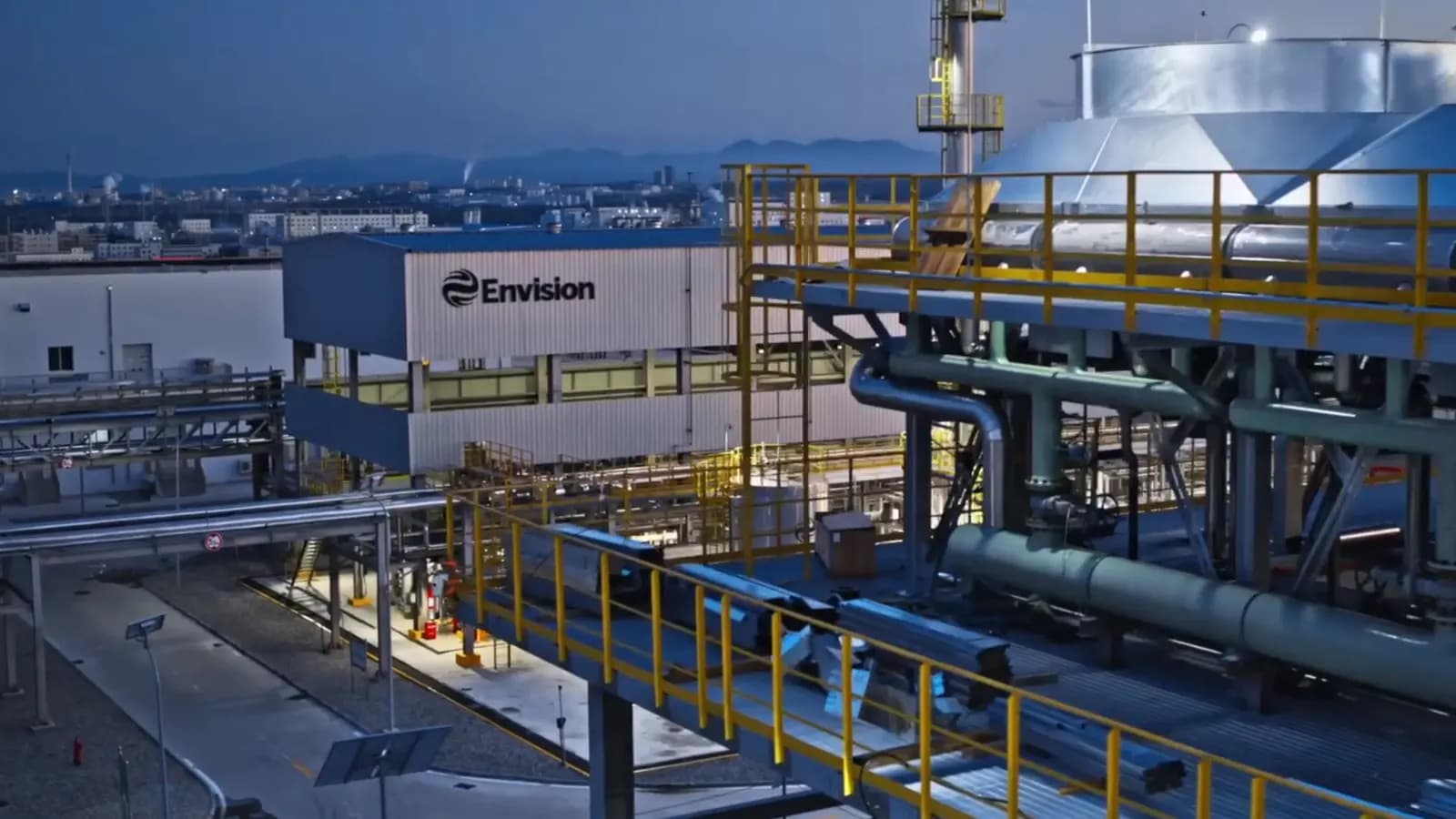
The power demands of AI data centers are forcing a rethink of infrastructure design. China's Envision says it has taken a different route to the problem, putting an 800-volt direct-current (DC) power architecture into commercial use at its Galaxy AI campus in Ulanqab, Inner Mongolia. The company claims this is the first commercial deployment of such a configuration.
Trials of the system, which relies on a controller called Dubhe and an accompanying energy model, began in August 2026. But the company's claims about efficiency, cost and savings have not yet been backed by independent measurements.
A shorter path from grid to server
In conventional facilities, electricity from the grid typically passes through several conversion stages before it reaches servers and accelerators. Each stage requires additional equipment and introduces potential conversion losses.
In Envision's design, a solid-state transformer converts 10-kilovolt medium-voltage alternating current directly into an 800-volt DC distribution line. According to the company, this approach cuts the number of conversion steps, raises electrical efficiency and noticeably shrinks the floor space that power equipment occupies in the data center. A higher-voltage distribution network could also reduce the amount of copper cabling required, which may help lower material needs as computing installations scale up quickly.
Batteries smooth out sudden GPU loads
Battery storage is another pillar of the architecture. AI workloads can cause sharp swings in electricity demand, putting extra strain on the power infrastructure feeding densely packed computing hardware. Envision says its storage system can provide instant support within seconds and, in the event of an unexpected outage, several minutes of backup power.
The Dubhe controller is meant to coordinate the transformer and the batteries within milliseconds to manage sudden changes in GPU consumption. The company also says the setup allows higher-density server racks, meaning more computing capacity can be installed in a given amount of floor space.
Big targets, limited evidence so far
The Galaxy facility is expected to reach 3 gigawatts of capacity, a scale the company says could serve one million AI accelerators. Envision also plans to use the technology under its Mission Gobi initiative, which targets 5 gigawatts of renewable-powered computing capacity by 2030. The program focuses on desert regions, where the company expects renewable generation and energy storage to support large computing projects.
The system is designed to work alongside renewable electricity sources, with batteries intended to balance supply against shifting computing demand. Even so, the company has not presented independently verified measurements of its efficiency gains, installation costs or savings compared with conventional systems. How the architecture behaves under sustained full load, and how it performs in facilities with very different hardware configurations, also remains unclear. The announcement may be a commercial milestone for Envision, but the scale of its claimed operational advantages still awaits detailed, independent testing.
Add as a preferred source on Google
Comments
No comments yet. Be the first to comment.