China's wind-powered 800 MW AI campus takes aim at Stargate
The first 120 MW of Envision's Galaxy campus in Inner Mongolia was finished in under a year, at a cost reportedly about a fifth of comparable US projects.
 Merhabyte Newsdesk · · 3 min read
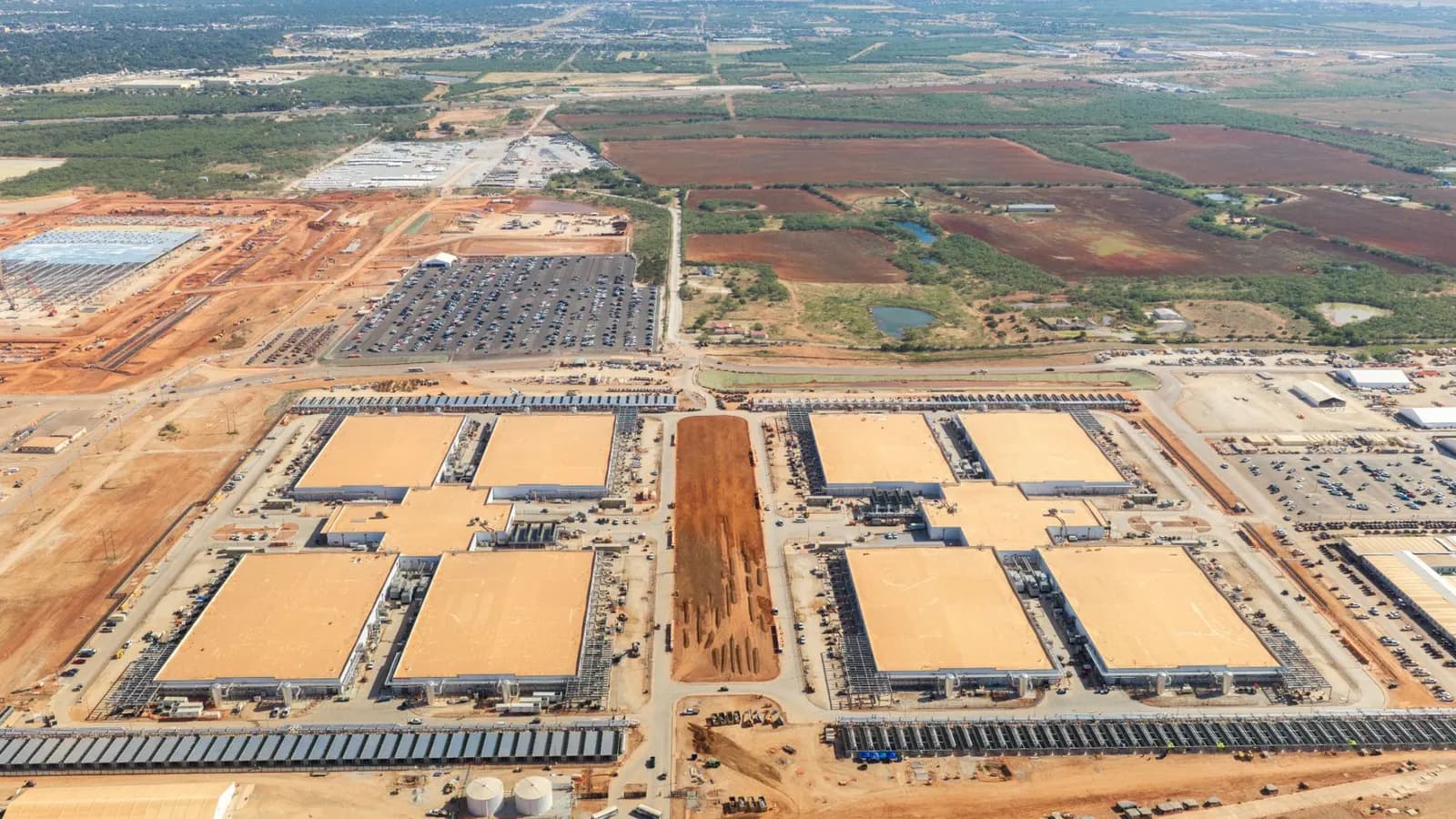
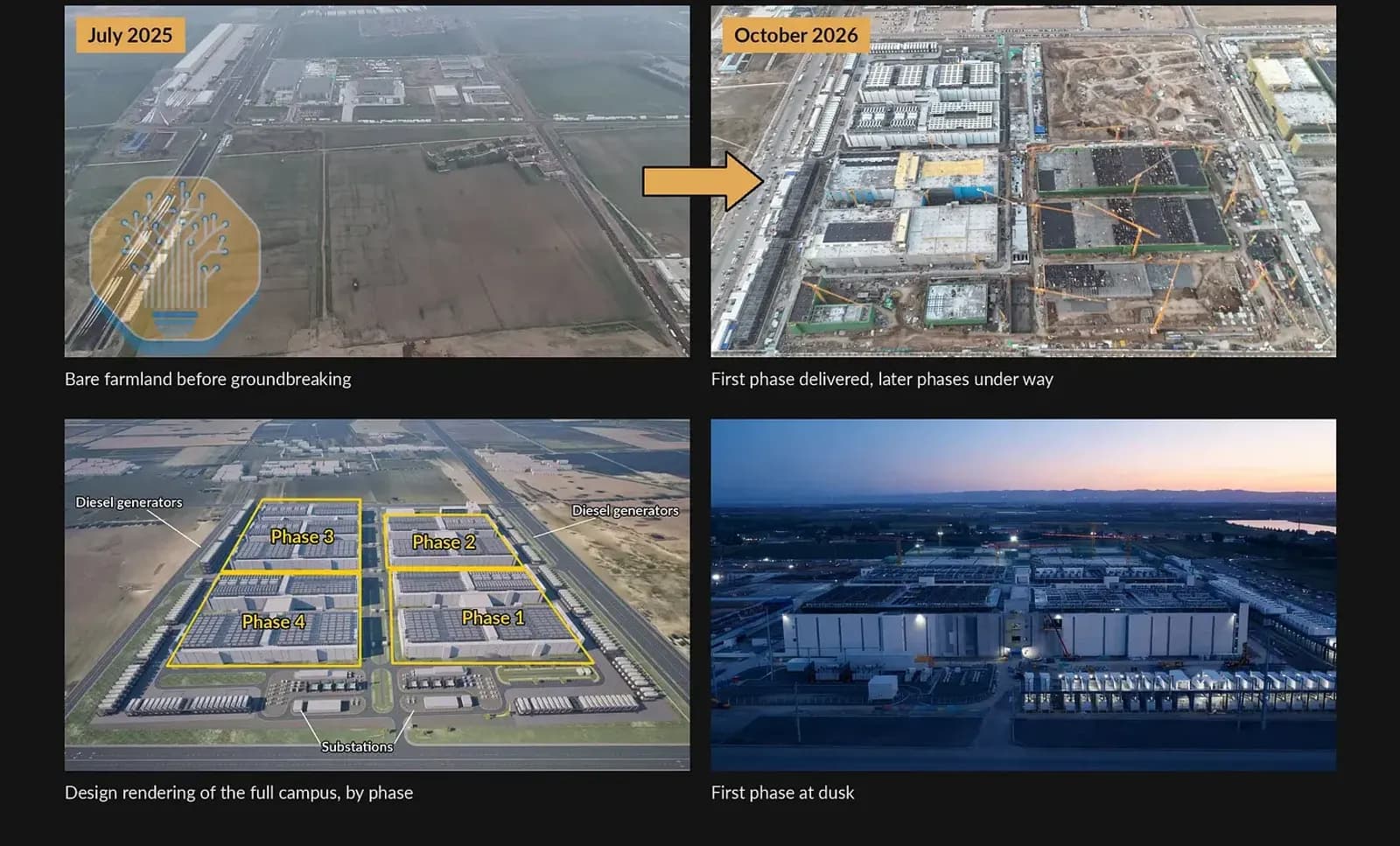
A giant AI data center campus under construction in China's Inner Mongolia region is starting to challenge the cost assumptions behind the US Stargate project. The first 120 MW of Envision's Galaxy campus in the city of Ulanqab was completed in under a year. Researchers who visited the site in September estimated that this phase cost roughly one fifth as much as similar US projects.
When finished, the campus is planned to offer up to 800 MW of IT capacity, close to the roughly 820 MW of critical IT capacity at the Stargate campus in Abilene, Texas. What stands out is not only the speed or the cost, but how the project secures its power.
Its own wind power and batteries
Galaxy is being developed in four phases for two internet companies that have not been named, and the campus is expected to reach full capacity by the end of 2027. Rather than simply drawing from the local grid, Envision is building its own supply infrastructure. The company has reportedly installed more than 100 GW of wind turbines to date, and the aim is for wind farms to cover over 60 percent of the electricity needs of the first two phases.
Two wind farms about 80 kilometers apart have a combined capacity of 420 MW, well above the 240 MW load expected in the first two phases, which leaves a necessary margin because turbines do not always run at full output. Ulanqab's wind capacity factor ranges between 35 and 40 percent, so a four-hour battery storage system is being added to keep power flowing when the wind drops.
The approach contrasts sharply with the situation in the United States, where developers are turning to on-site gas turbines to get around grid constraints. A shortage of turbines has reportedly pushed delivery forecasts out to 2030, and SpaceX is said to be planning to make its own turbine blades for gas-fired AI facilities. Envision, by contrast, places wind generation and battery storage right next to the servers.
800 V DC straight to the servers
In a 5 MW hall, the visiting researchers saw solid-state transformers (SSTs) converting 10 kV AC power directly to 800 V DC and delivering it to server racks. In conventional data centers, electricity typically passes through several intermediate conversion stages. This design removes components such as low-voltage transformers, uninterruptible power supplies and rectifiers.
Fewer conversion stages can cut equipment needs and energy losses, but the researchers did not share a measured efficiency gain for the Galaxy pilot. The 5 MW installation is a small part of the campus, yet it puts the technology into a live facility. Envision is reportedly planning a wider rollout in later construction phases. The move aligns with the 800 V DC distribution approach Nvidia has promoted for its future high-density AI systems.
Cooling, regional growth and the chip bottleneck
At Galaxy, liquid-cooled and air-cooled servers share a single water loop, which eliminates the need for conventional central chiller plants. That kind of simplification could ease infrastructure demands as AI servers generate more heat, although the design depends on the local climate and on how well heat can be rejected through the water loop.
Galaxy is the first major project in Envision's plans for 3 GW of data centers in Inner Mongolia, and the rest of the campus still looks like a busy construction site. According to a local report, about 30,000 construction workers are employed on 22 data center projects in the surrounding Chahar High-Tech Zone. Giants such as Alibaba, Huawei and ByteDance are also expanding infrastructure investment in a region that offers cheap electricity, open land and abundant wind.
Still, power and buildings do not equal computing capacity. US export restrictions continue to limit China's access to Nvidia's most powerful chips, which remains a separate obstacle to the campus's actual AI performance.
Add as a preferred source on Google
Comments
No comments yet. Be the first to comment.