
Anthropic: Mythos Cut AMD MI355X Bring-Up From a Year to 3 Days
Anthropic told IPO investors that Claude Mythos Preview wrote nearly all the kernels needed to run a model on AMD's MI355X with almost no human intervention. The claim reopens the debate over CUDA's moat.
 Merhabyte Newsdesk · · 2 min read
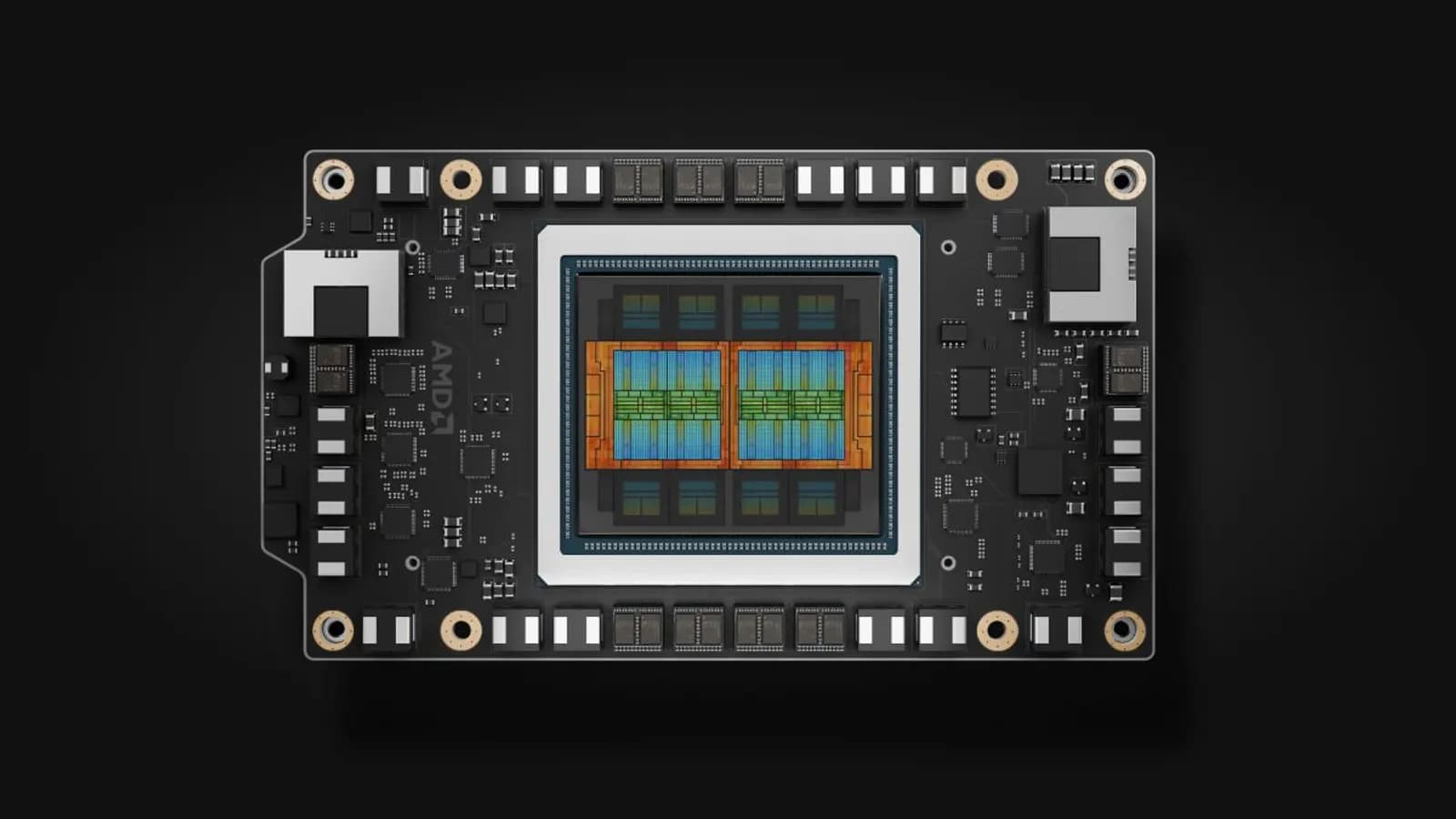
Preparing a new chip platform to run AI models has, in Anthropic's past experience, taken six to twelve months and required dozens of engineers. In a presentation to investors ahead of its IPO, the company said that work shrank to roughly three days with Claude Mythos Preview. According to the account, the job was completed "with almost no human intervention."
The claim is being read not just as a productivity story but as a sign that the advantage Nvidia's CUDA software ecosystem has defended may be eroding. The low-level code that ties a model to a single vendor's chip has long been considered part of CUDA's moat.
What the three days covered, and Anthropic's numbers
According to the account, the three days covered getting one Anthropic model to run the prompt-processing stage on AMD MI355X GPUs at a "useful level of performance." Mythos reportedly either ported or wrote "nearly 100 percent" of the required kernels. A footnote in the presentation notes that the three-day figure applies only to prompt processing for a single model.
Anthropic co-founder and chief compute officer Tom Brown made the comparison, saying the old approach required a team of dozens of engineers. The six-to-twelve-month figure reflects the company's past experience bringing new accelerators online through conventional engineering. The prospectus itself gives no number, saying only that new chip platforms can now be brought up far faster than before.
A multi-chip strategy and a widening AMD partnership
Anthropic already runs its models on Nvidia and AMD GPUs, Google's TPUs and AWS Trainium. Brown said this infrastructure is managed as a single fungible pool of compute, and described the early decision to go multi-chip as an unusual bet. The company began working with AMD GPUs for the first time this year, and the two sides have an agreement of up to 2 gigawatts. Under it, AMD is also using Claude to optimize workloads for its Instinct GPUs and to speed up ROCm development.
That picture could push chip choice closer to a purchasing decision than a software-compatibility one. Even so, the cost of switching has not disappeared entirely.
Is the CUDA moat really eroding?
CUDA is a mature platform some twenty years old. AMD's counterpart, ROCm, uses the HIP programming layer, so code written for CUDA has to be converted; AMD built a tool called HIPify for that purpose. In April, Anush Elangovan, AMD's vice president of AI software, said Claude was better than HIPify because it has built-in web search.
AMD has argued since last August that AI can write this kind of code, though a research agent it showed off then fell short of expert engineers. In September 2025, CEO Lisa Su said a significant share of CUDA code could be translated to AMD in software. In July this year, AMD executives said engineers were generating GPU kernels with AI models and that in some cases the results beat even hand-tuned versions. OpenAI's Philippe Tillet also relayed that an engineer confirmed everything was working within a few days.
Until now, all of these claims came from AMD or from AMD's stage. That is why it carries more weight that Anthropic, a buyer rather than a seller of chips, is putting numbers in front of investors on the eve of its IPO.
Add as a preferred source on Google
Comments
No comments yet. Be the first to comment.


