
AMD Reaches 40% of TOP500 Systems as New Lux Debuts at No. 14
The latest TOP500 list, published at SC26, shows 202 AMD-powered systems. Lux, built with the US Department of Energy, enters at 14th place.
 Merhabyte Newsdesk · · 2 min read
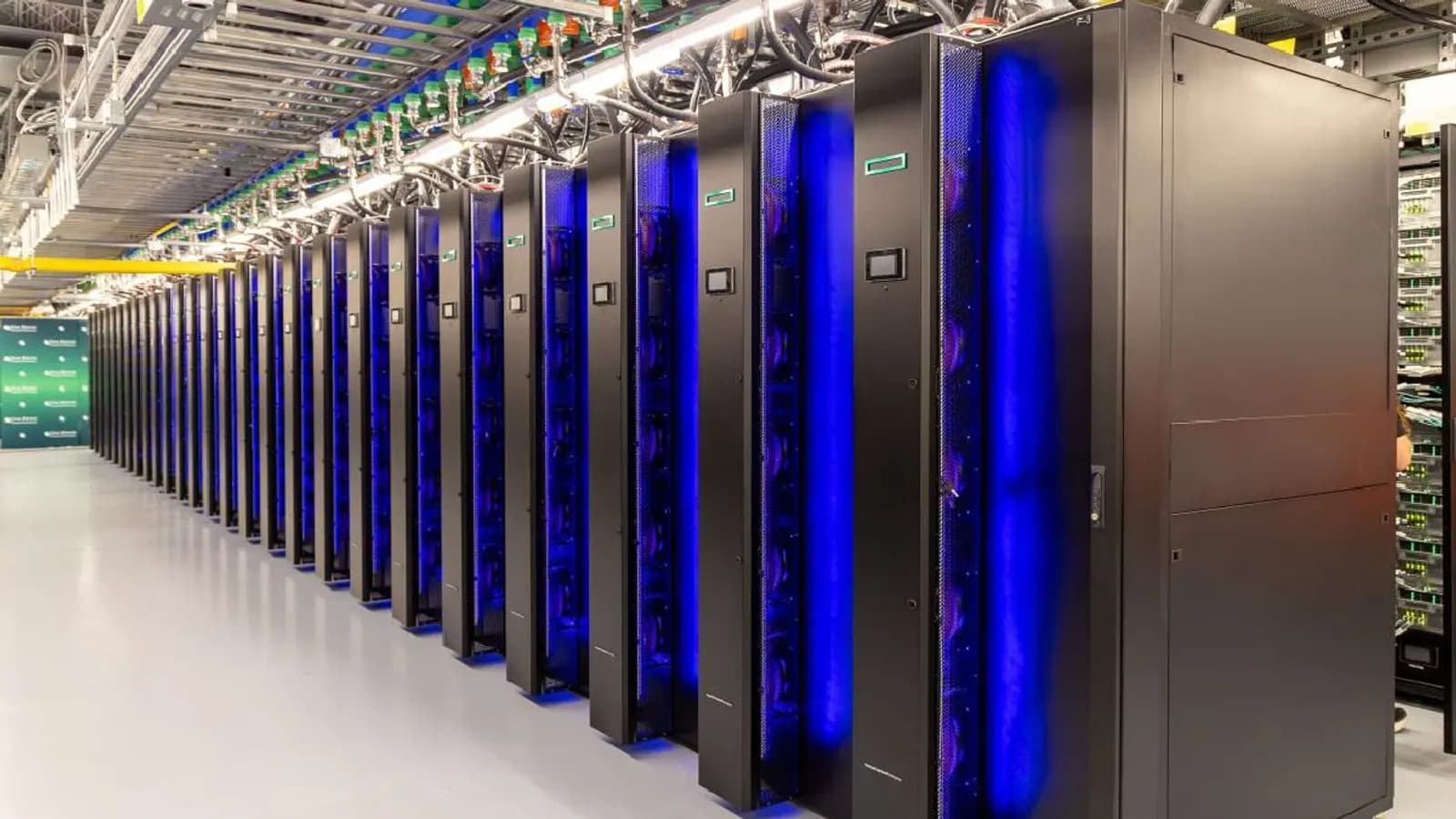
The newest edition of the TOP500 list, which ranks the world's most powerful supercomputers, was published as part of SC26. According to the list, AMD now powers 40 percent of the ranked systems. The number of AMD-based machines rose from 177 last year to 202, an increase of roughly 14 percent.
The most notable new entry is Lux, developed by AMD and the US Department of Energy (DOE). Built by HPE, the system debuts at 14th place in its first appearance on the ranking.
The top ten stays unchanged
The upper end of the table was largely preserved. China's LineShine, which joined the list in June, remains in first place. El Capitan, which runs on AMD chips, is second and Frontier third. Aurora holds fourth place and JUPITER Booster fifth. HPC7 is sixth, Eagle seventh and HPC6 eighth, while Fugaku and Alps keep ninth and tenth.
AMD's representation in the top ten is also the same as in the previous list. Systems such as El Capitan, Frontier, HPC7 and HPC6 are built on AMD hardware.
Inside Lux
Lux is the first product of a $1 billion agreement between the DOE and AMD, announced about a year ago, covering the development of two supercomputers. The system was developed by AMD and the DOE and built by HPE. It is housed within the Oak Ridge Leadership Computing Facility at Oak Ridge National Laboratory, alongside machines such as Frontier.
The machine uses more than 4,000 Instinct MI355X GPUs spread across over 500 nodes. For high-performance computing workloads that require FP64, it delivers 317 PetaFLOPS. Peak figures reach 20 ExaFLOPS with FP8 for AI training and 40 ExaFLOPS with FP4 for inference. With 288 GB of HBM3E memory per GPU, total system memory comes to 1.1 PB. The host processors are AMD EPYC, networking relies on AMD Pensando, and the nodes sit inside HPE ProLiant Compute XD685 servers. Details on which EPYC generation is used were not available.
Genesis Mission and the AI focus
Lux provides 3.5 million node-hours per year, half of which is set aside for Genesis Mission research. Launched by a presidential executive order in November 2025, the initiative calls for a coordinated national effort in AI-driven discovery and innovation. Under the order, the goals include training scientific foundation models on federal datasets and building AI agents that can test hypotheses and automate research workflows.
Although Lux is the first supercomputer dedicated to Genesis Mission, the initiative does not rely entirely on new machines; existing systems such as the Intel-based Aurora at Argonne National Laboratory are also at least partly assigned to the research. Lux was designed primarily for AI research and is not positioned as Frontier's successor. Discovery, the next-generation flagship exascale system to be developed jointly by the DOE, AMD and HPE, is planned to come online in 2028.
Add as a preferred source on Google
Comments
No comments yet. Be the first to comment.


