
SpaceX Reportedly Swaps Nvidia's 72-GPU Rack Cabling for an 84-Layer PCB
SpaceX and xAI's custom system, codenamed Kessel, reportedly replaces the cabling in Nvidia's Vera Rubin NVL72 with a giant PCB. One goal is data centers in orbit.
 Merhabyte Newsdesk · · 3 min read
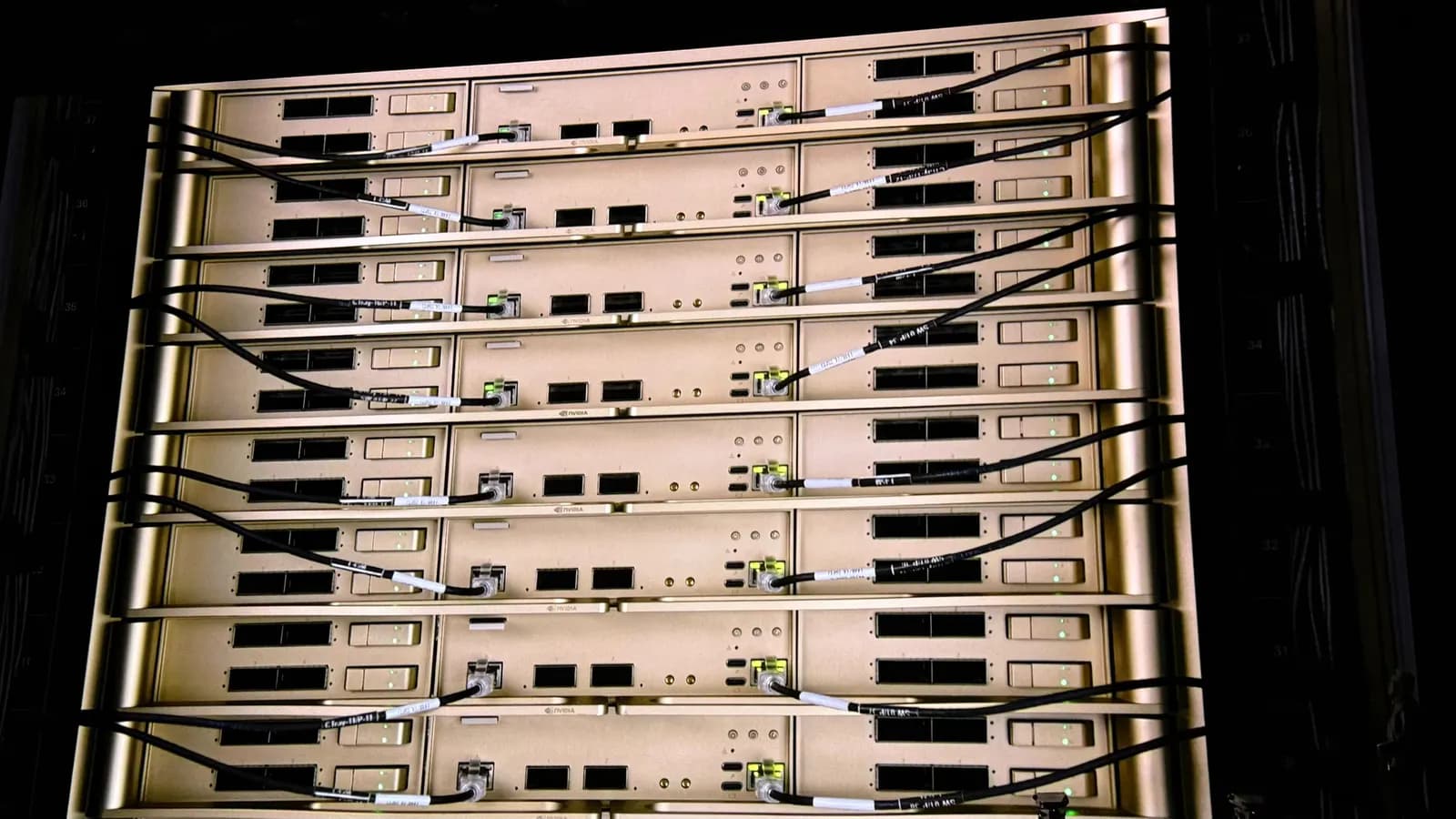
According to an analyst report, SpaceX and xAI are working on a custom version of Nvidia's Vera Rubin NVL72 rack-scale AI system. The system, codenamed Kessel, replaces the traditional NVLink cable assemblies with a giant 84-layer printed circuit board (PCB). The design is said to be partly intended for data centers in orbit.
Kessel keeps Nvidia's basic configuration but builds the interconnect around a different, solid-state approach. SpaceX is also said to keep buying Nvidia silicon directly from the company while sourcing the remaining components on its own, which could give it more control over its hardware supply chain.
Kessel's architecture: a passive midplane instead of cables
Kessel preserves the core layout of the Vera Rubin NVL72 platform: 36 Vera CPUs, 72 Rubin GPUs and nine NVLink switch trays. In Nvidia's standard design, the 72 GPU packages are spread across 18 compute trays and nine NVLink switch trays, linked by internal NVLink cable cartridges.
SpaceX instead plans to place the compute and switch trays back to back around a passive PCB midplane. The approach resembles a scaled-down version of Nvidia's Kyber design, which spans 576 AI GPUs (in 144 packages) and also relies on a PCB-based interconnect rather than cables. According to the analysts, the design targets both ground-based and orbital deployments.
What an 84-layer board brings, and what it risks
The most striking element of Kessel is the 84-layer midplane, which uses ultra-low-loss M10 copper-clad laminates. The backplane in the Kyber architecture, by contrast, was based on a far more complex 156-layer PCB with M9 laminate. Nearly halving the layer count could significantly improve manufacturability and yield, though the more advanced laminate would almost certainly raise material costs.
Moving to a midplane could simplify system assembly by eliminating a large number of high-speed cable connections, but it does not necessarily lower manufacturing cost. For context, today's high-end server motherboards use 15 to 20 layers, and server accelerator boards go past 20. An 84-layer board is extremely difficult to build: a defect in an inner layer can ruin the whole board, so yield could be a major obstacle. Whether Kessel makes economic sense therefore depends on whether the savings from dropping cables and sourcing components independently outweigh the cost of this expensive midplane.
Sourcing model and what it means for Nvidia
Kessel also marks a departure from Nvidia's usual system-level sales model. Rather than buying Nvidia's ready-made L6 compute boards, or the L10 trays Nvidia plans to sell with the Vera Rubin generation, SpaceX is reported to be buying AI accelerators, CPUs, switches and networking components directly from Nvidia and getting the rest from third-party suppliers. That would let the company pick its own PCB makers, component suppliers and manufacturing partners, optimize the hardware for its own infrastructure (which matters for orbital deployments) and possibly cut out intermediary costs.
In return, SpaceX would take on more responsibility for system design, validation, manufacturing quality and the supply chain, work that large cloud providers have been doing for years. Given the current memory shortage, how easily SpaceX and xAI can secure memory is a separate open question.
For Nvidia the picture is less clear. Selling only CPU and GPU packages directly, rather than complete compute boards, could reduce its revenue. On the other hand, the model might encourage other large customers to build their own Nvidia-based systems, ultimately putting more Nvidia-based machines into service, which could matter as custom silicon from hyperscalers spreads quickly. For that to happen, though, Kessel would have to be a major success and show clear advantages over systems Nvidia designs itself.
Add as a preferred source on Google
Comments
No comments yet. Be the first to comment.


