
Nvidia Unveils Rubin HPC With Over 50,000 CUDA Cores
At Supercomputing 2026, Nvidia announced Rubin HPC, a GPU built for scientific computing and agentic workflows. The chip is expected to arrive in 2028.
 Merhabyte Newsdesk · · 2 min read
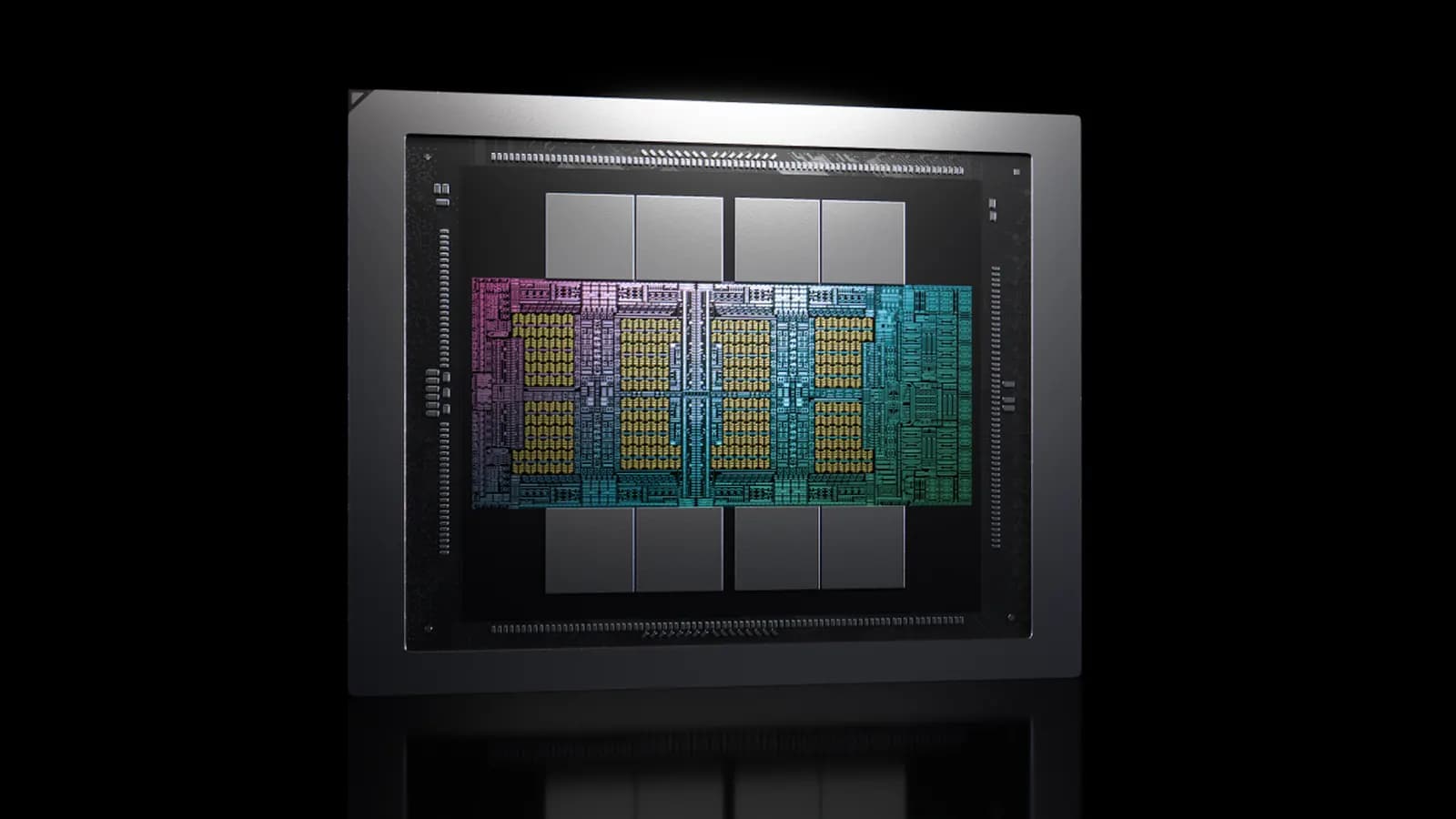
As Supercomputing 2026 got under way, Nvidia announced Rubin HPC, a new member of its Rubin GPU family. According to the company, the chip is designed to accelerate agentic workflows and simulations for scientists, engineers and analysts who work with large datasets.
Nvidia says Rubin HPC has the highest CUDA core count of any GPU it has built to date, at more than 50,000. The chip's detailed physical design has not been shared, and key specifications such as memory and bandwidth remain undisclosed.
Core count and a possible multi-die design
Today's Rubin GPU has 224 SMs and 28,672 CUDA cores. A jump to more than 50,000 cores suggests the package would need more dies to scale compute resources by that much, which recalls the Rubin Ultra GPU, where four dies are linked via NVLink-C2C. That is an inference, however; Nvidia has not said anything about the chip's physical layout, and the illustrative image it shared does not appear to reflect a multi-die configuration.
The memory picture is also unclear. No figures were given for HBM capacity or bandwidth. Nvidia also did not say whether compute resources on the chip have been rebalanced directly in favor of FP64, even though AMD and Intel are highlighting that approach in their own GPUs at the same conference. Nvidia instead stresses the chip's suitability for agentic workflows.
NVLink 7 and data movement
For data flow between GPUs, Nvidia will use the NVLink 7 interconnect. The company gave no new details on in-rack bandwidth or the physical layer. Earlier disclosures about the technology indicate that the 3.6 TB/s of per-GPU bandwidth offered by NVLink 6 is retained, while the scale-up domain, the group of GPUs that can be connected within a single fabric, is enlarged.
Nvidia says Rubin HPC's balanced design combines higher compute resources with faster data movement between nodes, though no concrete figure was provided for the latter. According to the company, this approach will help feed enormous datasets in areas such as climate research, genomic analysis and financial simulation to the chip, reducing idle compute and improving utilization.
Agentic workflows and CUDA-X
Nvidia is positioning Rubin HPC especially for researchers, engineers and analysts who work with clusters of agents. In the scenario the company describes, these users would sweep the problem spaces of their fields with swarms of agents. Nvidia adds that domain-specific CUDA-X libraries can be used to boost performance on Rubin HPC.
The goal, Nvidia says, is to tighten the reasoning loop that runs from hypothesis to simulation to refinement and reach the most promising results faster. The company argues that faster simulation will improve agents' performance in these fields and bring discovery opportunities forward. Concrete performance data to back this expectation has not yet been shared. Nvidia says Rubin HPC will become available at some point in 2028.
Add as a preferred source on Google
Comments
No comments yet. Be the first to comment.


