
Malaysia plans data center law to curb AI GPU smuggling
Malaysia wants data center operators to report AI accelerator imports and power use under a planned law. Whether power data alone can expose smuggling is doubtful.
 Merhabyte Newsdesk · · 3 min read
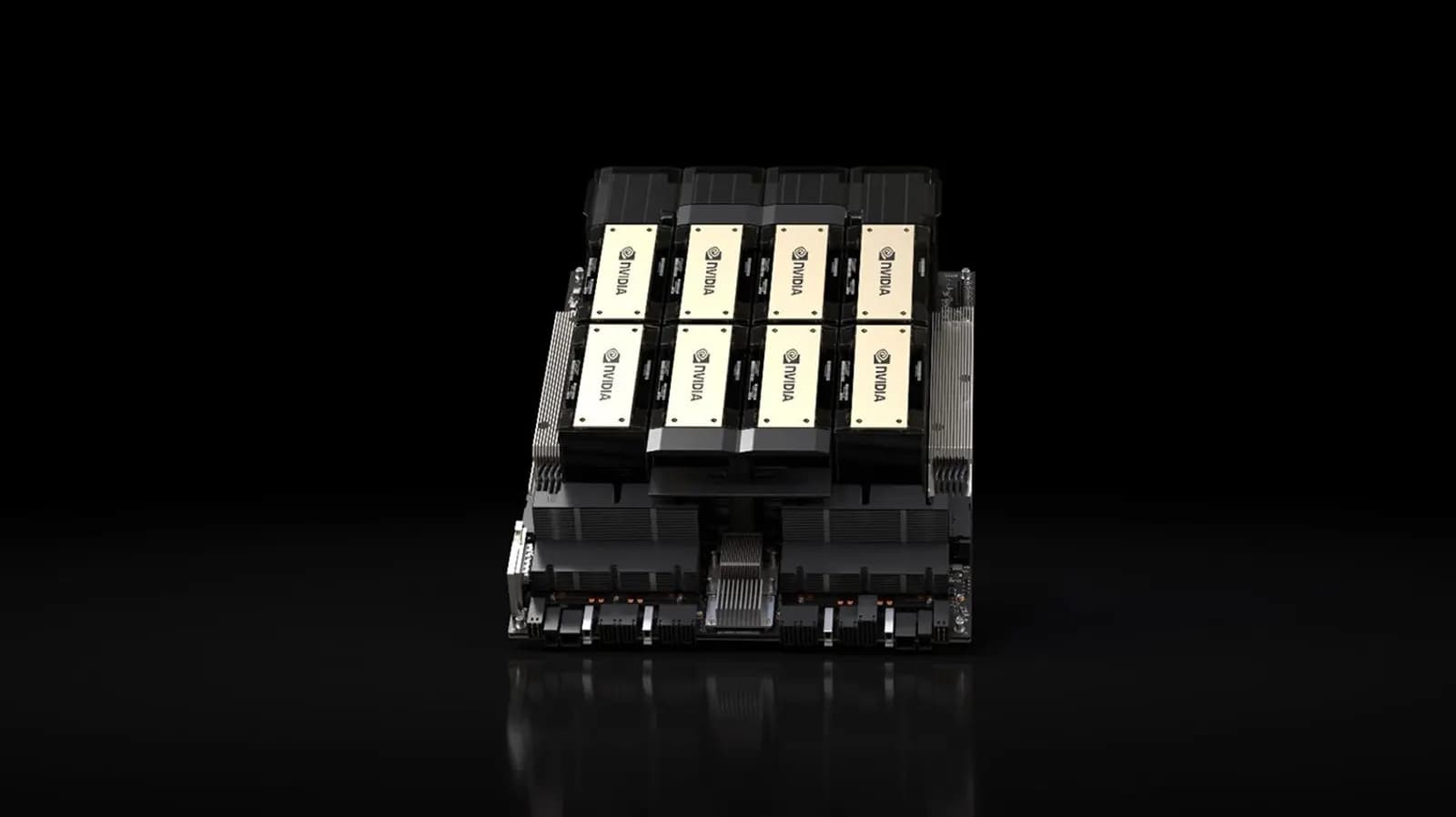
Malaysia is planning a new law that would require data center operators to disclose their imports of AI accelerators and their electricity consumption. The rules have two goals: to stop export-restricted hardware from being diverted to countries such as China, and to make better use of the country's energy infrastructure.
The government is also considering charging operators for reserved electricity capacity they do not actually use. Yet the idea of spotting smuggling through power consumption, sensible as it looks on paper, runs into serious practical limits.
Legally imported GPUs are leaving the country
Investment, Trade and Industry Minister Datuk Seri Johari Abdul Ghani acknowledged that some companies rent space in Malaysian data centers, bring GPUs into the country legally and then smuggle them abroad. The Digital Ministry is also reviewing existing legislation to determine whether local authorities can act against entities that re-export processors subject to US export bans.
The minister stressed that AI accelerators imported into Malaysia should be used inside the country. The planned law would require operators to report how many GPUs they import, their power consumption, the physical location of their facilities, and the identities of operators and hyperscale customers. Rather than limiting oversight to the project approval stage, the government wants to monitor data centers throughout their lifetimes.
Billing for unused capacity
The second part of the plan concerns electricity capacity. Operators would pay for all the capacity they reserve, regardless of how much they actually consume. A data center that reserves 100 MW but uses only 50 MW, for example, would still pay for the remaining 50 MW.
The measure is meant to discourage reserving capacity that may not be needed for one to three years. It is also expected to make it less attractive to present AI hardware as if it were in use in Malaysia while actually routing it to China.
How much can electricity use reveal about GPU counts?
Power consumption data could help flag suspicious mismatches between the number of GPUs imported and the activity actually taking place at a site. But working out the number of accelerators in a facility from electricity use alone is nearly impossible. Nvidia's H100 and H200 SXM GPUs are rated at 700 W and its B200 SXM accelerators at 1,000 W, yet in real workloads these cards do not necessarily draw their nominal power.
Without knowing the server configuration, the consumption of CPUs, memory, storage and networking gear, or the facility's power usage effectiveness (PUE), any estimate remains uncertain at best. On top of that, there can be a long gap between a GPU being imported and actually being put into service. Reliable verification would require mechanisms such as physical inventory audits or tracking individual processors.
Johari said Malaysian authorities are ready to cooperate with their US counterparts and could share information on facilities housing specific GPUs on request. However, it was not stated whether the law would require reporting of GPU models and serial numbers, or whether on-site inspections would be carried out.
Why Malaysia is an attractive route
Malaysia has become one of Southeast Asia's key data center investment hubs as cloud providers and AI infrastructure companies expand their presence in the region. According to Johari, 117 data center projects have been approved so far, 55 of which are already operating.
The proliferation of local AI data centers makes Malaysia a convenient place to redirect restricted hardware: it is far easier to hide a needle in a stack of needles than in a haystack.
Add as a preferred source on Google
Comments
No comments yet. Be the first to comment.


