US smartphone market shrinks 9% as Apple's share hits 57%
US shipments fell 9% year on year in the third quarter. Global memory constraints hit Android hardest, while Apple was the only major brand to avoid a decline.
 Merhabyte Newsdesk · · 2 min read
The US smartphone market had a weak third quarter (July to September), according to the latest data. Total shipments fell 9% year on year, with global memory constraints cited as the main cause of the decline.
Android devices, and entry-level models in particular, took the brunt of the shortage. Budget handsets were already the hardest hit in the second quarter, and the third quarter continued that trend. In a shrinking market, Apple expanded its share significantly, while brands outside the four-way group of Apple, Samsung, Motorola and Google saw their share all but disappear.
Apple is the only brand to avoid a decline
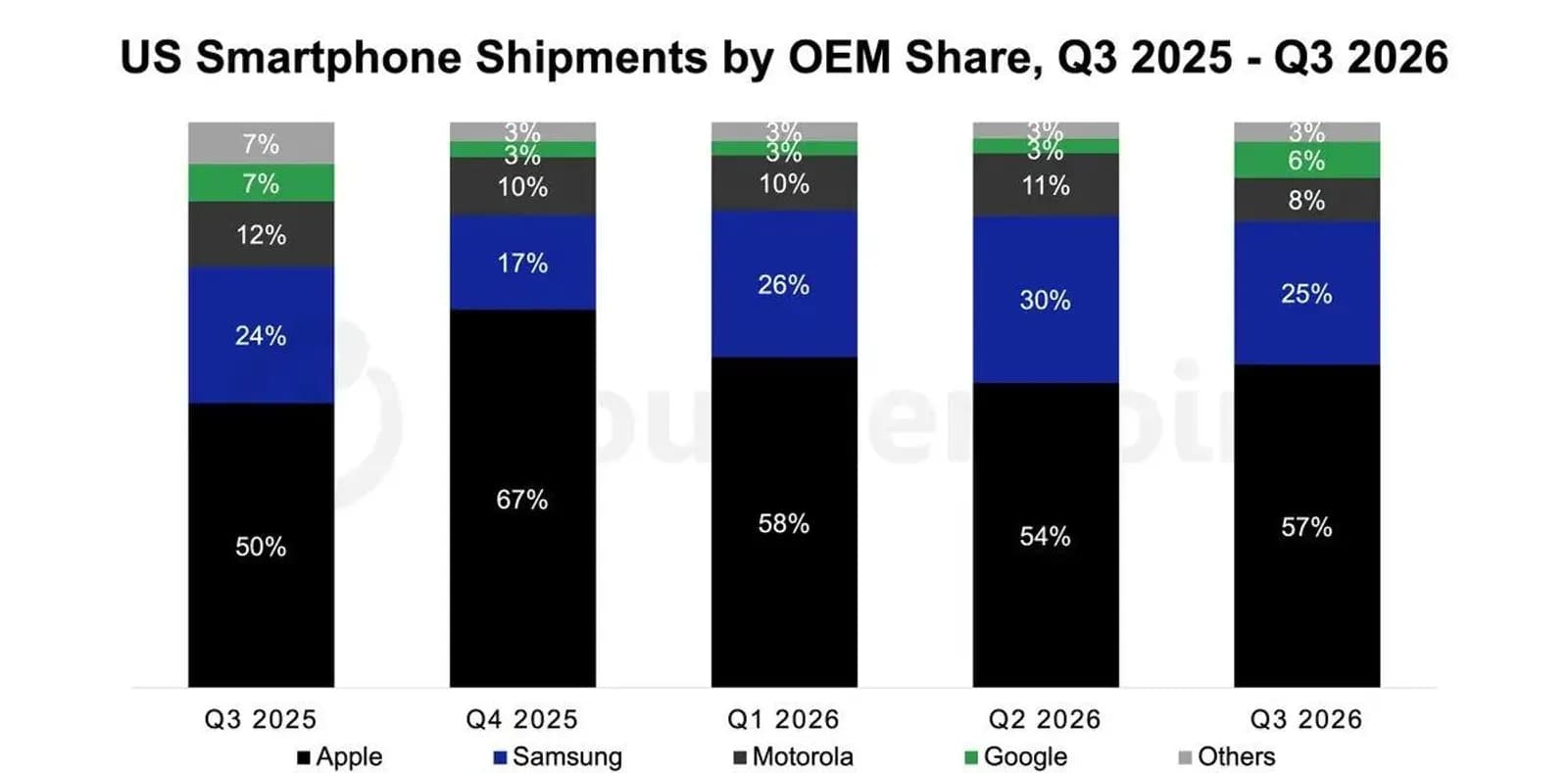
Apple was the only brand in the US whose shipments were not hit by the downturn. Its market share rose from 50% in the third quarter of 2025 to 57%. With the overall market contracting and Apple's shipments holding up, its share gained sharply.
The rest of the market could not match that resilience. Rising memory costs put more pressure on brands concentrated in low-priced models. That the constraints hit the Android side hardest, and entry-level devices within it, suggests the trend that began in the second quarter is continuing.
How Samsung, Motorola and Google fared
Samsung ranked second with a 25% share. That is slightly above the 24% it held a year earlier but below the 30% it reached in the second quarter. The analysis attributes Samsung's comparatively smaller losses to its dual strategy of selling both flagship and entry-level Galaxy A series models. The Galaxy A line is known as the company's family of affordable and mid-range phones.
Motorola, in third place, saw its share fall from 12% to 8%. The company had managed shipment growth in the second quarter, but its low-end models came under pressure from higher memory costs. Google's share slipped from 7% to 6%. Even so, that is double the 3% it held in the second quarter, with the launch of the Pixel 11 series driving the quarter-on-quarter increase.
Smaller brands nearly vanish
All brands other than Apple, Samsung, Motorola and Google together accounted for just 3% of the market in the third quarter, down from 7% a year earlier. The picture shows the US market consolidating further around the four major players.
The data indicates that cost pressure from memory shortages hit the low-priced Android segment hardest and shifted market share in Apple's favor. How the memory constraints will develop in the coming period is not covered in the available data.
Add as a preferred source on Google
Comments
No comments yet. Be the first to comment.