
Two Chinese Firms Cleared for Nvidia H200 Have Empty Offices
New Matrix and Maginfra, approved to buy Nvidia's H200 chips, turned out to have vacant offices. Their executives are tied to firms the US has sanctioned.
 Merhabyte Newsdesk · · 2 min read
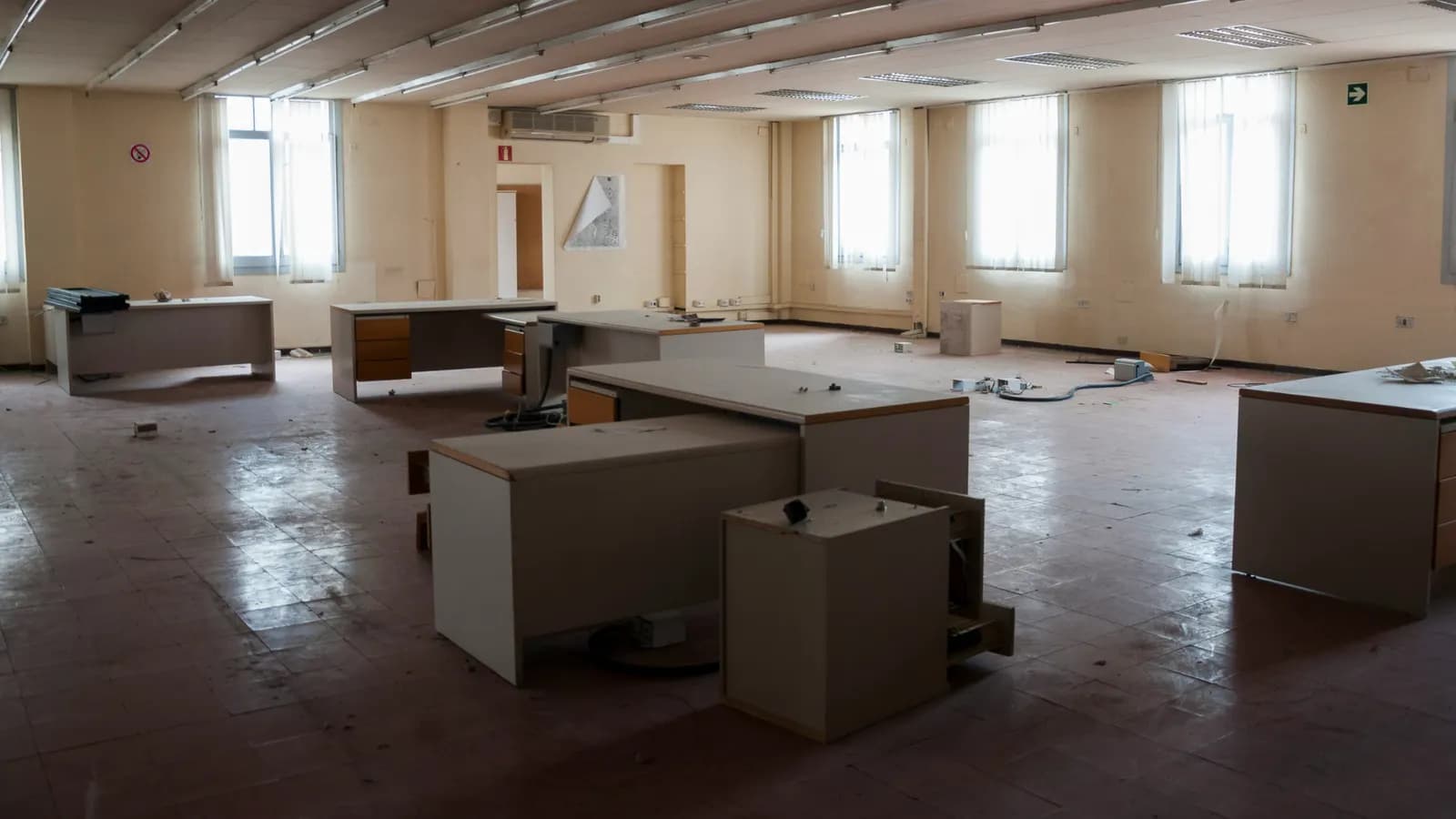
An investigation into two Chinese companies approved to buy Nvidia's H200 AI chips has found nothing but empty offices at their listed addresses. Reception staff in the buildings reportedly did not recognise the firms, and people working nearby said they had never seen anyone come or go.
The companies' executives are also linked to firms the United States has sanctioned for working with the Chinese military and supplying advanced technology. The findings have revived a question about the US Commerce Department's GPU export licensing: whether it genuinely scrutinises each application, or simply waves them through.
The empty offices of New Matrix and Maginfra
Among the Chinese firms approved are well-known names such as Baidu, BYD, Tesla Shanghai, Alibaba, Tencent, ByteDance and ZTE, which was previously banned from the US market. Alongside them are two little-known companies, New Matrix and Maginfra, whose offices are described as vacant spaces holding only a few pieces of office furniture.
New Matrix's website gives no information about its owners or history. According to public company records, its founder, Li Bin, and two principal partners are connected to Wise Road, a private equity firm the US has sanctioned for helping China acquire sensitive chip technology. Li Bin is also chairman of Tsinghua Unigroup, a technology holding company partly owned by the Chinese government, and owns New H3C Semiconductor Technologies, which the Commerce Department added to its Entity List over cooperation with the Chinese military.
Links to sanctioned companies
Maginfra is suspected of ties to Inspur, which has been on Washington's blacklist since 2023 for supporting the People's Liberation Army. The two companies are said to share staff, patents and a similar state-partnership structure.
Neither firm is listed as the end user of the Nvidia chips. Their role is to mount the chips into AI servers and pass them on to the final customer, but who those customers are remains unclear. Another licensed firm, Zhejiang Yindun Cloud Technology, is reportedly run by executives related to the founder of Range Intelligent Computing Technology Group, a data centre operator that sells computing capacity to Chinese military contractors. Part of Yindun's operations are said to run from a Range data centre.
Concerns over a lack of oversight
Liza Tobin, a former China director at the White House National Security Council, said she had serious concerns that neither the Commerce Department nor Nvidia had exercised the care needed to ensure licence conditions were being met. The findings reinforce fears that the department approved applications without questioning them closely instead of reviewing them one by one.
The background is as follows. In April 2025, President Donald Trump banned exports of Nvidia's AI GPUs, including versions tailored to Washington's performance threshold. Late last year the decision was reversed in exchange for a 25 percent share of sales revenue. Even so, the first H200 shipments took more than eight months to reach China, because Beijing did not allow Chinese tech firms to buy the chips in the early months of the year. Once China lifted its import ban, many companies applied for licences, and roughly two dozen firms have reportedly been approved so far.
Add as a preferred source on Google
Comments
No comments yet. Be the first to comment.


