
Top-Spec OLED MacBook Pro Costs $14,549, Mostly Memory and Storage
Apple's new OLED touchscreen MacBook Pro tops out at $14,549 in its 16-inch form. Roughly $9,000 of that goes to 16TB of SSD and 128GB of memory, not the display.
 Merhabyte Newsdesk · · 3 min read
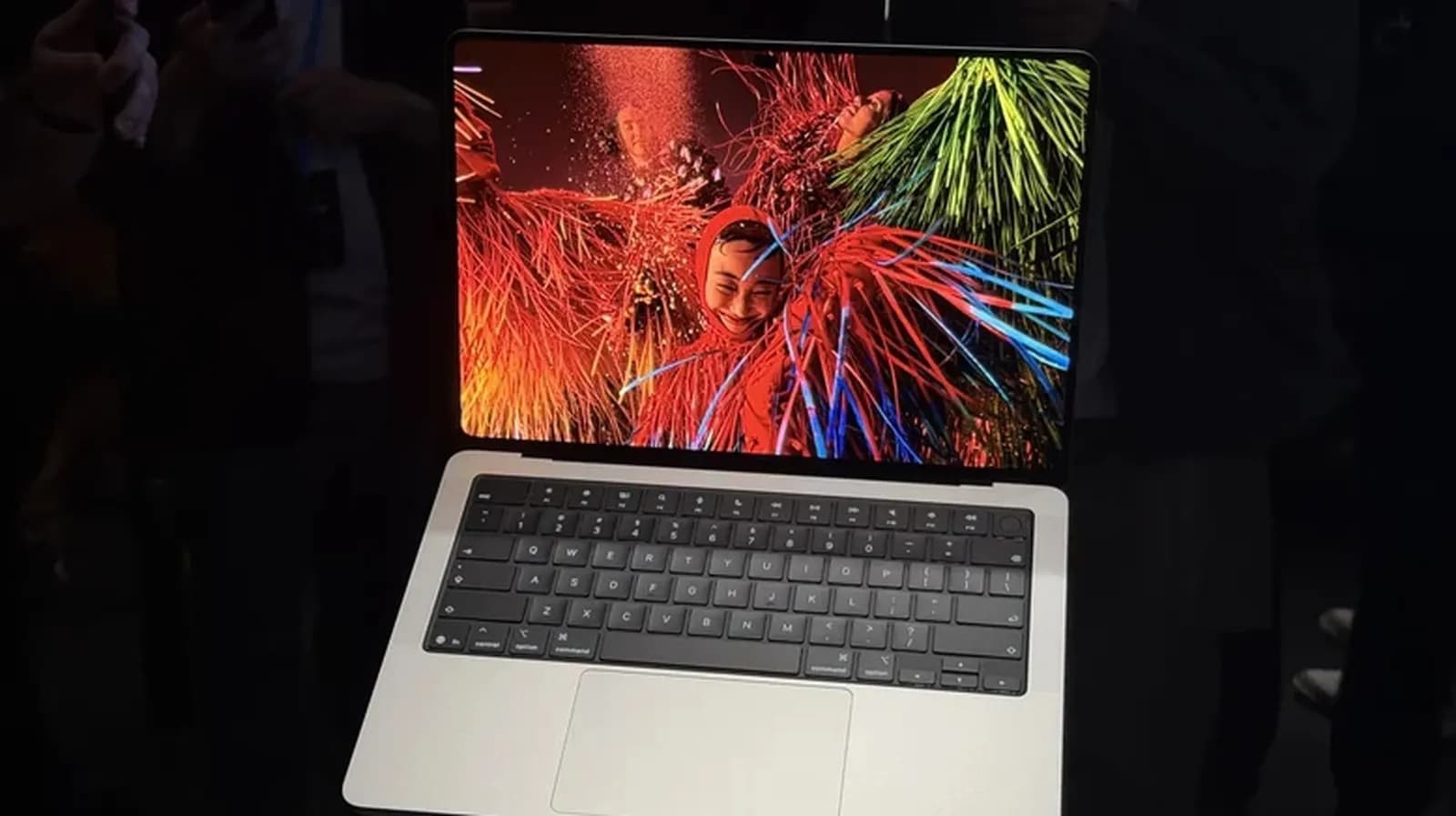
Apple announced a redesigned MacBook Pro with an OLED touchscreen on October 28, with sales expected to begin shortly afterward. Buyers who want the 16-inch model with the new PROLED XDR Display fully loaded will pay close to $15,000: Apple's online store lists that configuration at $14,549.
Very little of that figure pays for the touchscreen. Moving the SSD from 2TB to 16TB adds $7,000 on its own, and stepping unified memory up from 48GB to 128GB adds another $2,000. Those two upgrades make up about 62 percent of the total, or roughly $9,000.
The display accounts for only $400
The top configuration starts from the 16-inch model with the M5 Max chip, which offers an 18-core CPU and a 40-core GPU, paired with 48GB of memory and a 2TB SSD. Strip out the storage, memory and display upgrades and the machine costs $5,399. Even that is $2,000 above the $3,399 entry-level 16-inch model with the M5 Pro.
The non-touch 16-inch MacBook Pro remains on sale, and its maxed-out version costs $10,149. Configured with the same specs, the OLED model comes to $10,549. In other words, the redesign and the OLED touchscreen move the price by just $400.
About $500 per terabyte, with no volume discount
The storage tiers climb steeply. Going from 2TB to 4TB costs $1,000, 8TB costs $3,000 extra, and 16TB costs $7,000 extra. That works out to roughly $500 for each additional terabyte, with no discount as capacity grows. The 16TB option is a first for the MacBook Pro; the M5 Max models released in March topped out at 8TB.
Memory options are restricted as well. 128GB of RAM is available only with the 40-core M5 Max. The 32-core version is fixed at 36GB, and the M5 Pro stops at 64GB, so anyone who wants maximum memory must first buy the most expensive chip. Nano-texture glass, etched directly into the display surface to cut reflections, is the cheapest upgrade on the list at $150. The 14-inch model tops out slightly lower, at $14,249. The cheapest way to reach 16TB of storage is the 14-inch M5 Max with 36GB of memory, at $11,499.
Memory price spikes inflated the sticker
Rising memory and storage costs explain much of how prices got here. In March 2026, a 16-inch MacBook Pro with the M5 Max, 40-core GPU, 128GB of memory, 8TB of storage and nano-texture glass cost $7,349. In late June, Apple raised prices across its Mac and iPad lineup, citing the rapid buildout of AI data centers and the extraordinary demand for memory and storage it has created. By the end of June the same configuration cost $10,149, a $2,800 increase with identical hardware. The base 14-inch MacBook Pro also rose from $1,699 to $1,999.
According to industry data, smartphone DRAM prices rose 50 percent quarter over quarter in the first quarter of 2026, while NAND flash prices rose by more than 90 percent. Apple has told customers it has never seen a component price climb so fast and so far, and says it has absorbed as much of the cost increase as it can.
The new PROLED XDR screen is a 16.3-inch tandem OLED panel. Apple says it reaches 1,000 nits sustained and 2,000 nits peak brightness, covers the P3 and Adobe RGB color gamuts, refreshes at up to 120Hz, responds to touch and carries a Dynamic Island at the top. The M5 Max chip delivers 614GB/s of memory bandwidth, which Apple says is enough to run large language models locally on a laptop. Because a local model has to fit in memory, and the GPU shares the same pool as the CPU, 128GB of RAM makes the most sense for exactly that workload. The 16-inch M5 Max model weighs 4.1 pounds, is 0.63 inches thick, and its 100Wh battery is rated for up to 22 hours of video streaming.
Apple is plainly aiming this $15,000 machine at professionals such as filmmakers, 3D artists, photographers and developers. But with every extra terabyte adding $500, most of those workloads would be better served by a 2TB or 4TB model paired with an external Thunderbolt 5 drive. For people running local LLMs, the 128GB memory option is easier to justify, though the 16TB SSD still accounts for nearly half the total price.
Add as a preferred source on Google
Comments
No comments yet. Be the first to comment.


