Starlink Mobile Signs Qualcomm 5G Deal, but Spectrum Is the Hurdle
SpaceX's mobile carrier venture Starlink Mobile has signed a multi-year deal with Qualcomm for terrestrial base stations. Analysts say the real obstacles are spectrum and tower leases.
 Merhabyte Newsdesk · · 3 min read
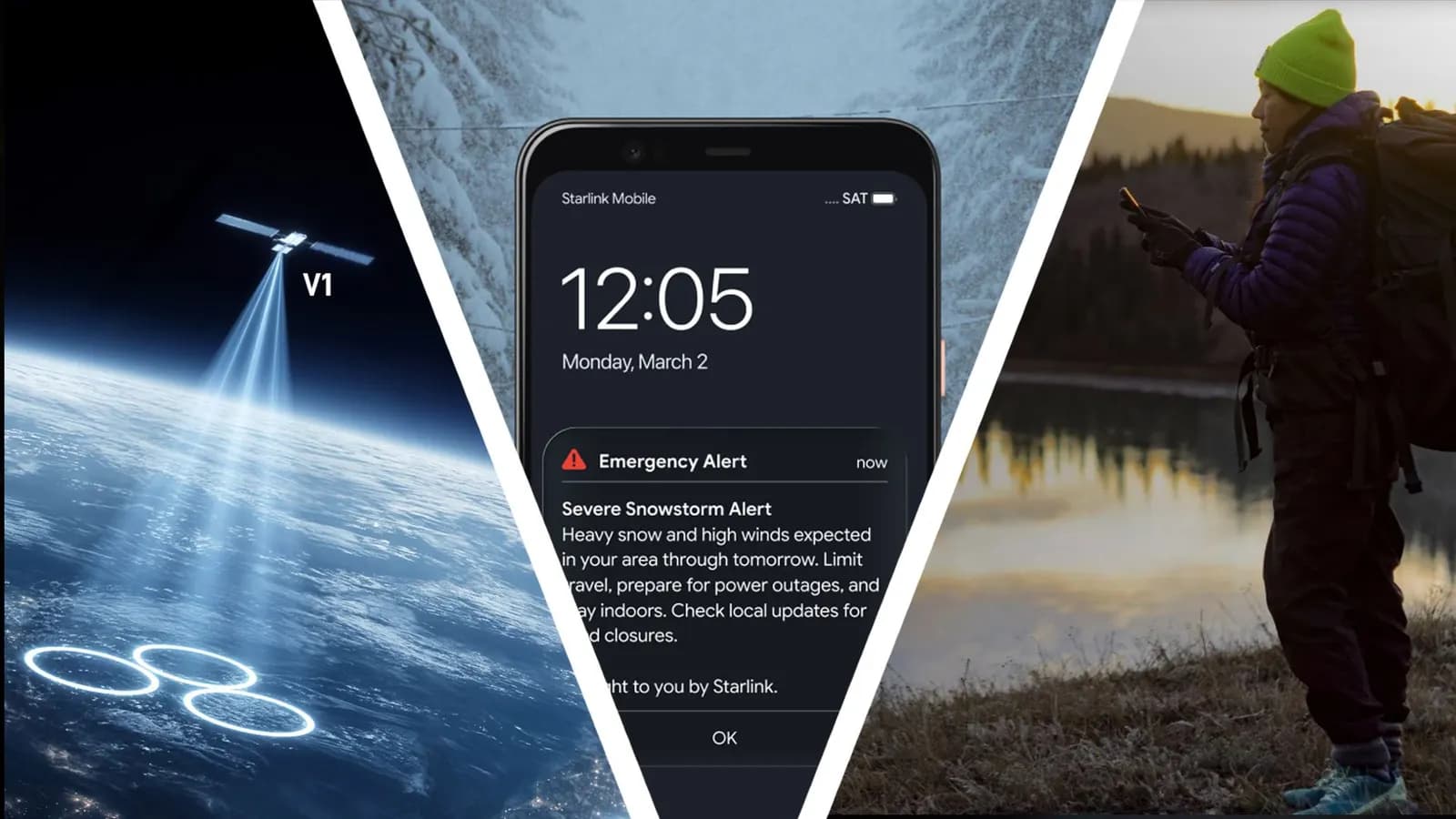
Starlink Mobile, the mobile network venture owned by SpaceX, has taken another step toward challenging Verizon, AT&T and T-Mobile in the United States. The company announced that its terrestrial base stations will use Qualcomm's Dragonwing Cellular Infrastructure platforms. According to Qualcomm, the stations are designed to improve coverage, capacity and spectrum efficiency, helping the network carry more traffic more efficiently.
Under the multi-year agreement, Qualcomm technology will be deployed at tens of thousands of sites, with installation planned to begin in 2027. Qualcomm described it as its largest 5G deal to date. Industry experts, however, argue that equipment supply alone is not enough: for a new operator trying to build its own network, the main difficulties lie elsewhere.
Musk's bold message
In posts on X, Elon Musk called the Qualcomm technology excellent and claimed there would eventually be a single network offering good signal everywhere. Separately, reports in a newspaper that SpaceX wants to buy Boost Mobile, which belongs to EchoStar, are also circulating. Telecom experts say the announcement is just one step in what could be a long fight with entrenched carriers.
Analysts: spectrum and towers are the real issue
Telecom analyst Tim Farrar said the deal is an important part of building a new mobile network in the US, but that securing the spectrum to be used with the Qualcomm equipment, along with tower leases, matters more. In Farrar's view, buying EchoStar's remaining spectrum assets and reaching a settlement with tower companies would be the easiest and fastest route, given Starlink's goal of starting equipment installation next year.
Boost Mobile, however, has mobile virtual network operator (MVNO) agreements with T-Mobile and AT&T. According to a research note, those agreements are unlikely to be transferred to Starlink Mobile. Starlink Mobile was also reportedly turned down as an MVNO by the major US carriers recently. How easy it will be to lease towers is unclear; without that, even with spectrum in hand, Starlink Mobile would face the costly and laborious task of building its own terrestrial infrastructure from scratch.
Can it become a fourth carrier?
One industry analyst said the deal strengthens the possibility that Starlink Mobile could become a credible nationwide fourth carrier in the US. He cautioned, though, that many steps remain, including manufacturing radios, installing them on towers and activating service for paying customers. By his estimate, building the terrestrial network and launching the new satellites required will take at least several years, and even then it is unclear whether the company can succeed against the established operators.
Musk's promise of good signal everywhere does not yet match reality. A study of Starlink Mobile's direct-to-device (D2D) service found that Starlink fills coverage gaps but lags terrestrial networks in performance. In the tests, about one in seven Starlink Mobile D2D messages failed to deliver, compared with roughly one in fifty on terrestrial networks. The analyst stressed that this gap would have to be closed through investment in the terrestrial network.
Peter Adderton, CEO of MobileX and founder of Boost Mobile, believes Musk is playing a long game. In his view, the aim may not be merely to compete with carriers but to erode the sector's economics and push valuations down, so that an operator could later be bought at a much lower price. Adderton also said the point is not simply to win wireless subscribers but to change the economics of wireless service.
Comments
No comments yet. Be the first to comment.