Samsung Reportedly Building Custom HBM4E for Meta's AI Chips
A report out of South Korea says Samsung may be helping develop a custom HBM4E memory for Meta's in-house AI chips, with the base die possibly built on a 2 nm process.
 Merhabyte Newsdesk · · 2 min read
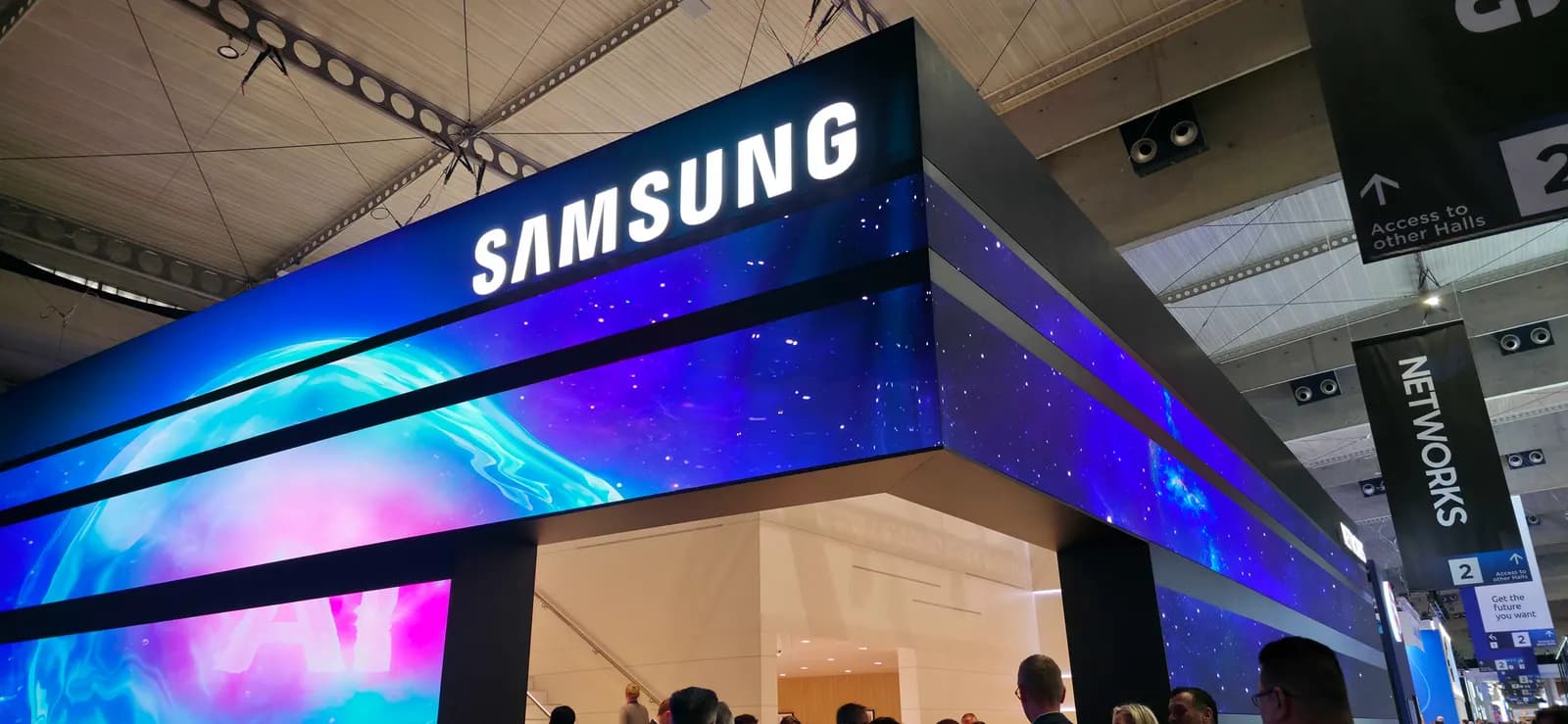
Samsung stands out in the AI supply chain as both a memory supplier and one of the very few foundry operators able to manufacture chips on advanced nodes such as 2 nm. According to a report from South Korea, the company may now also be involved in developing a custom high-bandwidth memory (HBM) chip for use in Meta's own AI processors.
The product is said to be based on Samsung's seventh-generation HBM4E memory, with Meta-specific functions integrated into the base die of the memory stack. The result would be less an off-the-shelf part offered identically to every customer than a design shaped around Meta's own requirements.
A custom base die on a 2 nm process
The report says the base die, which would carry the Meta-specific functions, could be manufactured on Samsung Foundry's 2 nm process. The base die is the foundation layer of an HBM stack, sitting beneath the memory layers, and building customer-specific requirements into it is the basis of custom HBM solutions.
The report also states that Samsung is moving quickly to develop custom HBM base dies on both 2 nm and 4 nm processes, depending on customer needs. With HBM4E, customer-specific versions are expected to be offered to buyers.
Samsung's edge over its rivals
Samsung already counts among the companies supplying HBM to leading names such as NVIDIA and AMD. What the report highlights is that the company has its own foundry division, something SK Hynix and Micron, which compete in the same market, do not have. That, it says, gives Samsung a significant advantage over its rivals.
Because demand for custom-designed memory chips is expected to grow, Samsung is seen as well placed to capitalize on the opportunities this segment opens up.
Why HBM matters
High-bandwidth memory is a vertically stacked type of memory used alongside accelerator chips in workloads that move enormous amounts of data, such as training and running AI models. As large technology companies push ahead with their own AI chips, interest in memory tailored to those chips is growing.
Everything described here rests on claims in a single report, and neither Samsung nor Meta has made a statement. Samsung developing custom HBM4E for Meta's chips is therefore unconfirmed for now and should be read as a reported development.
Add as a preferred source on Google
Comments
No comments yet. Be the first to comment.