
Rapidus reportedly misses 2nm SRAM goal, putting 2027 at risk
The Japanese chipmaking startup is said to have failed to produce working SRAM cells on its 2nm node and to be struggling with cleanroom contamination.
 Merhabyte Newsdesk · · 3 min read

Rapidus, Japan's government-backed semiconductor startup, is reportedly struggling to produce working SRAM cells on its EUV-based 2nm-class node. According to the information available, the company missed its goal of demonstrating functional SRAM cells by summer 2026, and it is also said to be fighting contamination problems in its cleanroom.
If the claims are accurate, Rapidus's plan to begin mass production of chips in 2027 is at risk. The company does not confirm any delay in volume production. In an interview, it said production would begin in the second half of fiscal 2027, which ends on March 31, 2028. The company previously stated its production targets without specifying a calendar or fiscal year, so the wording offers a different time frame from earlier targets, which by default read as calendar years.
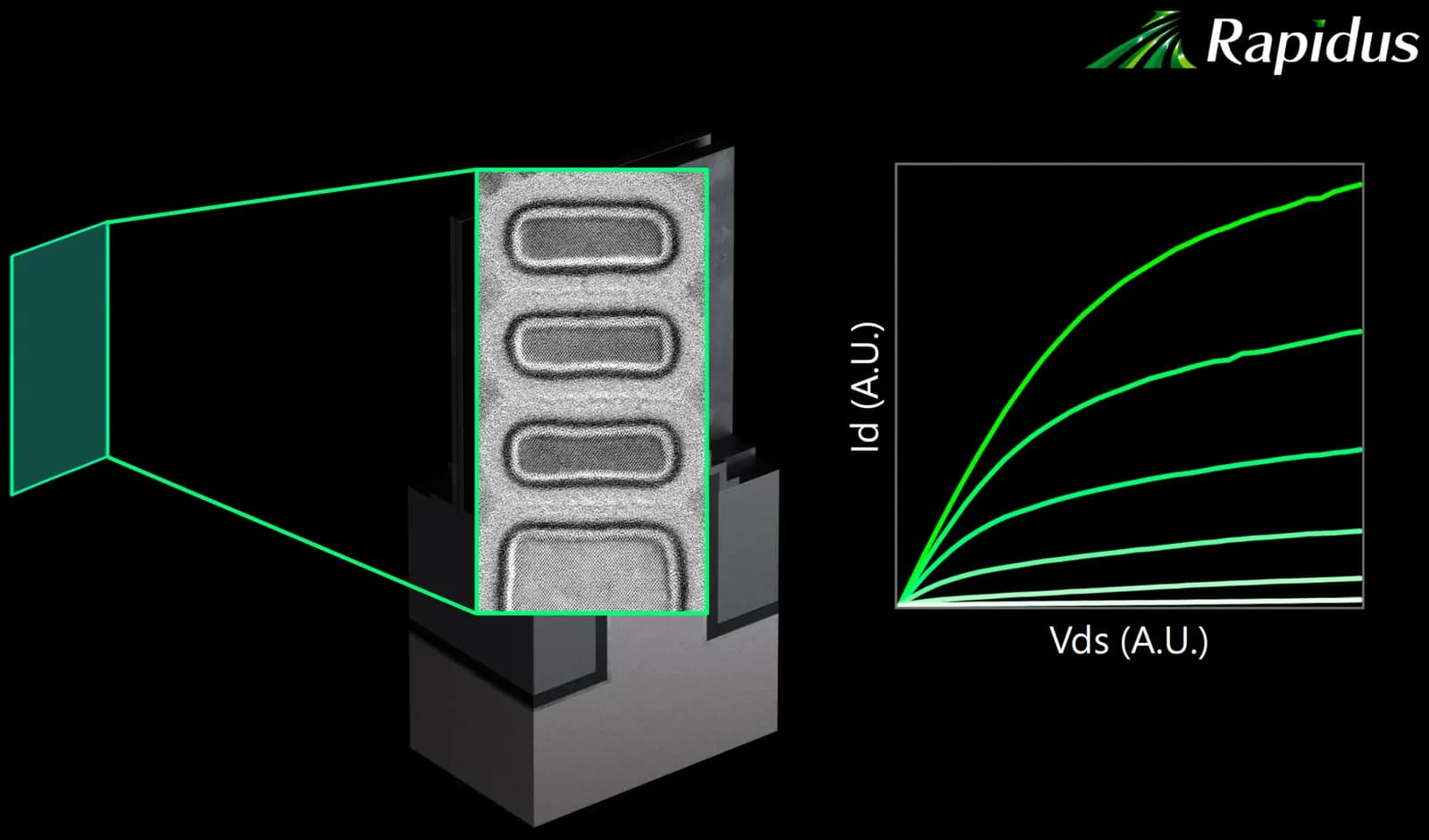
The hard road from transistor to integrated circuit
Rapidus began producing test structures with 2nm-class Gate-All-Around (GAA) transistors at its IIM-1 facility in Hokkaido in July 2025. At the time, the company said its prototype transistors showed the expected electrical characteristics, and CEO Atsuyoshi Koike said at Hot Chips 2025 that the transistor actually worked. That suggested the equipment and basic process steps were functioning as intended.
But building individual transistors is far easier than building integrated circuits made up of many interconnected devices. According to the reports, Rapidus was supposed to demonstrate working SRAM cells by summer 2026, and that milestone has not yet been cleared. The report does not say whether the problem lies in individual cells, in larger memory arrays, or in electrical characteristics and yield, so the exact nature of the issue is unknown.
Why SRAM matters so much
SRAM forms the basis of cache and other on-chip memory structures in modern processors, and it can contain hundreds of millions of bit cells. Its repetitive structure exposes manufacturing defects, transistor variability and problems that do not show up in single-transistor tests. For that reason, chipmakers widely use SRAM cell arrays and macros to evaluate, monitor and qualify process technologies. Low defect density in SRAM macros is also decisive for the yield of SRAM-heavy chip designs.
A classic 6T SRAM bit cell consists of six transistors: two cross-coupled inverters and two access transistors. Contacts, local interconnects, and word lines, bit lines and power lines are added on top. A full SRAM macro also needs peripheral circuitry such as row decoders, sense amplifiers, write drivers and control logic, which is why even a 256 KB macro counts as a fairly complex integrated circuit.
Measured against TSMC, time is running short
Manufacturers generally do not share their SRAM development timelines in detail. TSMC, however, usually reports the progress of its new nodes through the performance and yield of a 256 Mb SRAM array. For its N2 process, TSMC said in April 2023 that it had reached more than 80% of target device performance and over 50% yield on a 256 Mb SRAM test chip. By April 2024 those figures had risen to over 90% performance and over 80% SRAM yield, roughly six months before mass production, and in May 2025 transistor performance was close to target with average SRAM yield above 90%.
Rapidus, by contrast, has not disclosed any SRAM progress so far. The claim that it cannot produce working SRAM cells would imply that SRAM yield at this stage is zero. Before moving to volume production, the company needs to demonstrate working SRAM cells, integrate them into larger arrays, reach acceptable yield, have the process qualified, and start risk production about a year before high-volume manufacturing. There is no rule on how many quarters before mass production a working SRAM array or macro must be ready, but the reported setback clearly leaves the company limited time to complete critical development stages by the end of fiscal 2027.
Producing 2nm-class chips with GAA transistors and EUV lithography is extremely complex even for established manufacturers. So far, only Intel, TSMC and Samsung have moved into volume production with nodes based on GAA devices. Unlike FinFETs, GAA transistors have multiple vertically stacked silicon nanosheets surrounded by gate material, which improves electrostatic control but adds manufacturing challenges. Very small feature sizes also demand exceptional precision in deposition, etching, lithography and process control. For Rapidus, founded in 2022 and relying on process technology based on intellectual property developed by IBM, the task is harder still.
Add as a preferred source on Google
Comments
No comments yet. Be the first to comment.


