
OccupySaaS Aims to Clone SaaS Tools as Open Source Using AI
The user-led OccupySaaS project wants to build API-compatible, open-source alternatives to services such as Auth0 and Salesforce, using AI tools and clean-room methods.
 Merhabyte Newsdesk · · 3 min read
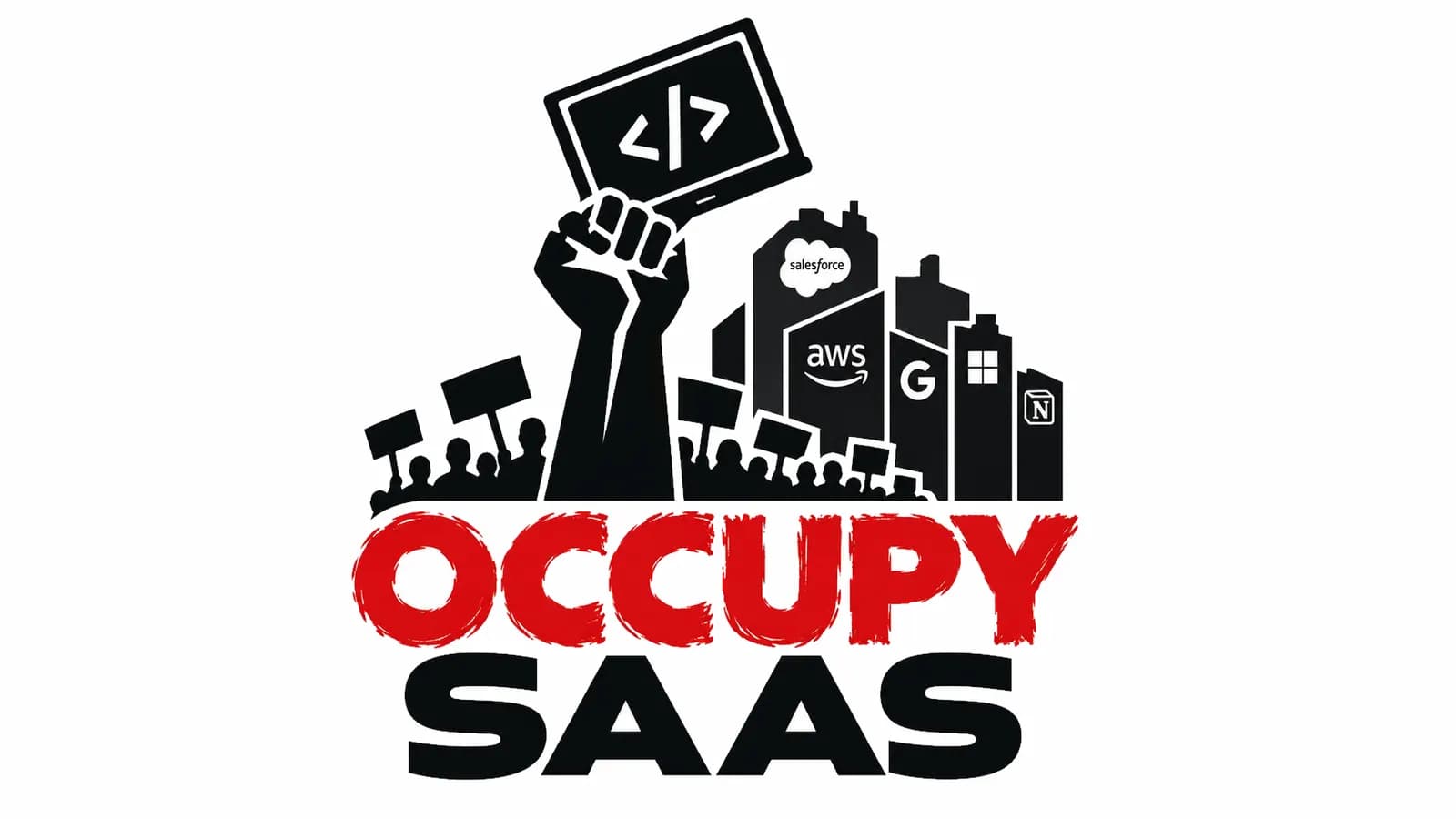
AI-assisted software cloning has become a hot topic lately. Software companies are unlikely to be pleased by users banding together to copy their products, but customers tired of subscription models, price hikes and declining software quality are receptive to such efforts. The interest around ArtCraft, often mentioned as an Adobe alternative, is one sign of that appetite.
The latest effort in this space is called OccupySaaS. Started by users, the project aims to create open-source versions of widely used cloud services, rewritten with AI tools using a clean-room approach.
First alternatives for Auth0 and Salesforce
Work is already under way. The alternative meant to replace Auth0 is called ZeroAuthy, while the one for Salesforce is called SalesCompel. Because these services run on the vendors' own servers, there is no binary to inspect or decompile. The reimplementation therefore relies on accessible documentation, APIs, the behavior of software development kits, and applicable open standards.
According to the project's site, the new software is meant to be API-compatible and a drop-in replacement wherever that makes sense. OccupySaaS also plans to find counterparts in documentation and wiki management, issue tracking, feature flag management, server and software observability, and customer support. The project does not name the products it is targeting in these categories, but Confluence, Jira, LaunchDarkly, Datadog and Zendesk are the obvious candidates.
Clean-room rules and technical hurdles
The project ties its development ethics to firm rules. All work must be reimplemented strictly through the clean-room method. Decompiled code cannot be used, confidential information or source code from former employers cannot be brought in, and user interface assets and trademarks cannot be copied.
The method brings both convenience and difficulty. On one hand, what matters is that user inputs are processed and produce the same outputs as the original software, and those behaviors are largely defined by specifications. On the other, hosted software behaves like a black box whose internal behavior and unexpected quirks are not immediately apparent. As with console emulators, full compatibility means reproducing even the existing API's bugs, and Jira is frequently cited as an example.
Go, licensing and the person behind it
The project's language of choice is Go. It was picked over Rust because all dependencies can be compiled and linked into a single binary, which can be copied to a target system and run without an installer. According to OccupySaaS, this makes packaging into Docker containers and self-hosting easier.
One could argue that the point of using SaaS is to make code and infrastructure problems someone else's problem, and that running your own instance can feel like a step backward. But because the software is released under the Apache 2.0 license, nothing stops anyone from offering hosting services built on it; Red Hat Enterprise Linux, GitLab and WordPress are cited as similar examples of hosted services built on open-source foundations.
The person behind the project appears to be Thomas Meadows, a software engineer with twenty years of experience. His personal page says project management is his strongest skill, which may come in handy at a time when steering AI agents toward a goal is becoming more important. The project site reads like a manifesto: it argues that per-seat licensing taxes growth, that the people who built the software are now being laid off, and that the 99 percent should own the software the 99 percent builds.
Comments
No comments yet. Be the first to comment.