Apple Explains Why the New MacBook Pro Has a Touch Screen
Apple executives laid out their reasoning for the touch-enabled OLED MacBook Pro, which goes on sale November 6 at a starting price of $2,899.
 Merhabyte Newsdesk · · 2 min read
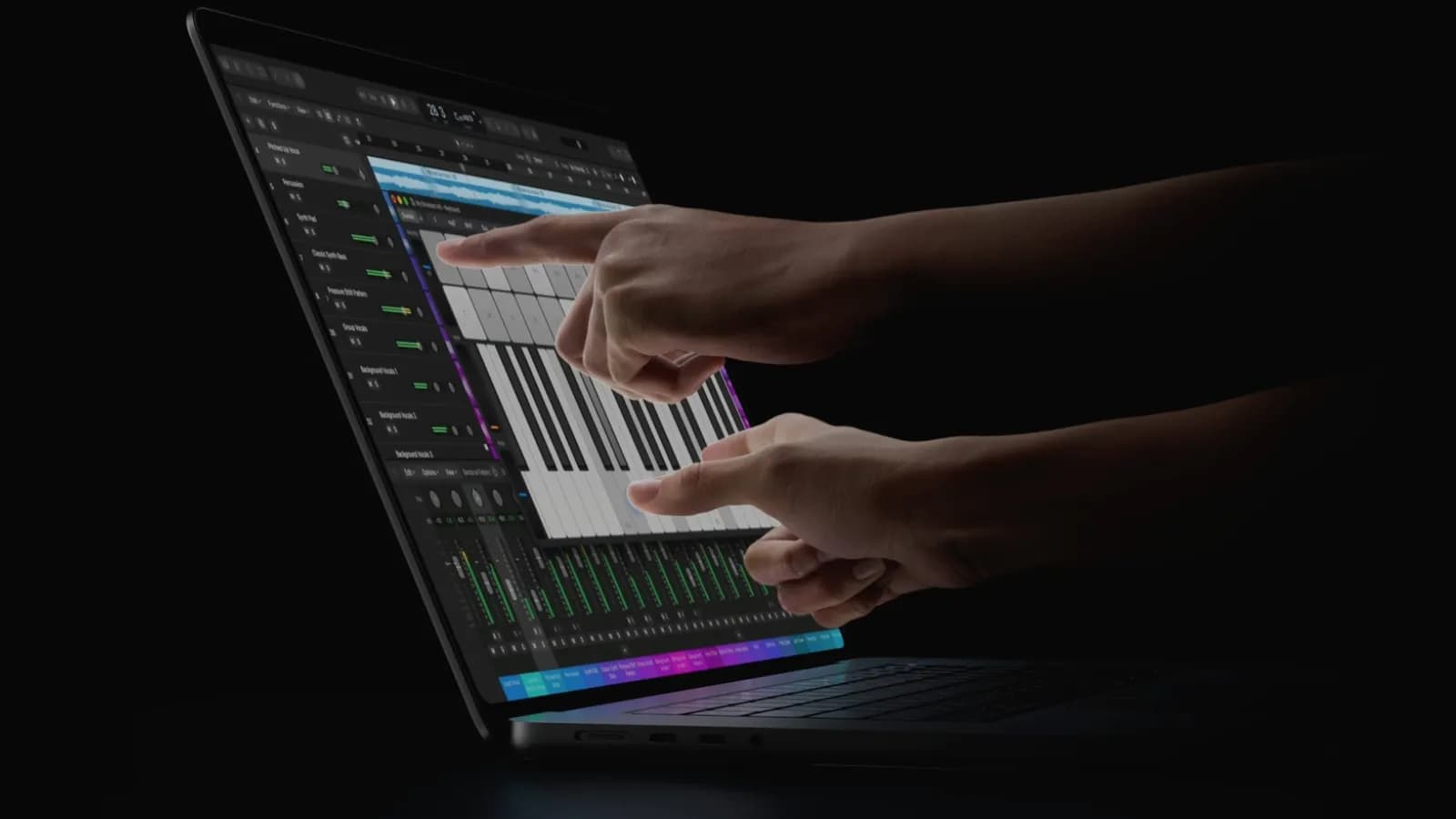
Apple has brought a touch screen to the MacBook Pro line, and several of its senior executives have now explained the thinking behind the decision in an interview. According to their account, Apple still regards the MacBook Pro as an indirect-input device, even with touch support added.
The new OLED MacBook Pro models are available for pre-order starting today and will go on sale on November 6, with prices starting at $2,899. In the interview, CEO John Ternus was joined by the executives responsible for hardware and marketing, who each addressed the decision from a different angle.
The Mac's primary input method isn't changing
Ternus stressed that the Mac was designed first and foremost around the trackpad and keyboard, working on an indirect-input model in which a surface separate from the screen, along with the keyboard, controls the cursor. In Apple's view, that structure remains fundamental even with a touch screen added. Ternus nonetheless acknowledged that touch can be comfortable and practical in certain situations, saying the goal was to add touch support without taking the product a step backward in any respect.
According to Ternus, the feature did not make the product heavier or thicker. Touch arrived together with the OLED panel, which he described as the best display Apple has ever put in a Mac. He framed it as one of several improvements in the product, saying, in effect, that there is also touch.
Apple has previously said it will not merge the iPad and Mac product lines because the two devices serve different purposes. Ternus's remarks fit that position: touch support complements the Mac's keyboard- and trackpad-centered design rather than replacing it.
The hardware and software were finally ready
Johny Srouji, who oversees hardware, said that display technology, Apple silicon chips and software had reached the level needed to meet the bar Apple set for touch integration. In other words, the company says it shipped the feature only once the screen, the chips and the software all met its own standards.
Greg Joswiak, who leads marketing, said professional users have been expecting touch. He added that a new generation of young content creators also expects touch support, suggesting the decision was tied to user expectations as well.
Engineering changes to support touch use
Apple made several hardware changes so that the touch screen would not compromise laptop use. The thermal management architecture was redesigned, with the aim of keeping the display from feeling warm to the touch. Apple also says the anti-reflective screen coating will not need more frequent cleaning than a standard display.
The hinge was reinforced as well, so the screen is meant to stay steady when pressure is applied by touching it. The new MacBook Pro models, now in pre-order, go on sale on November 6 at prices starting from $2,899.
Comments
No comments yet. Be the first to comment.